Generator Safety: Essential Do’s and Don’ts
Portable and standby generators provide reliable backup power during a power outage, but understanding generator safety is crucial to protect people, property, and equipment. Use this guide to learn about key hazards, such as carbon monoxide (CO) risks, and how to use a backup generator safely. Whether you’re a seasoned portable generator user or are considering purchasing your first unit, we’ll provide portable generator safety tips that apply to many setups.
Understanding Generator Safety
Improper generator use can lead to carbon monoxide poisoning, electric shock, fire from fuel, like gasoline, or hot surfaces, and mechanical injury. Many incidents occur during outages when equipment is quickly set up without proper ventilation or electrical safeguards. Focusing on generator safety precautions from the start helps you avoid these pitfalls.
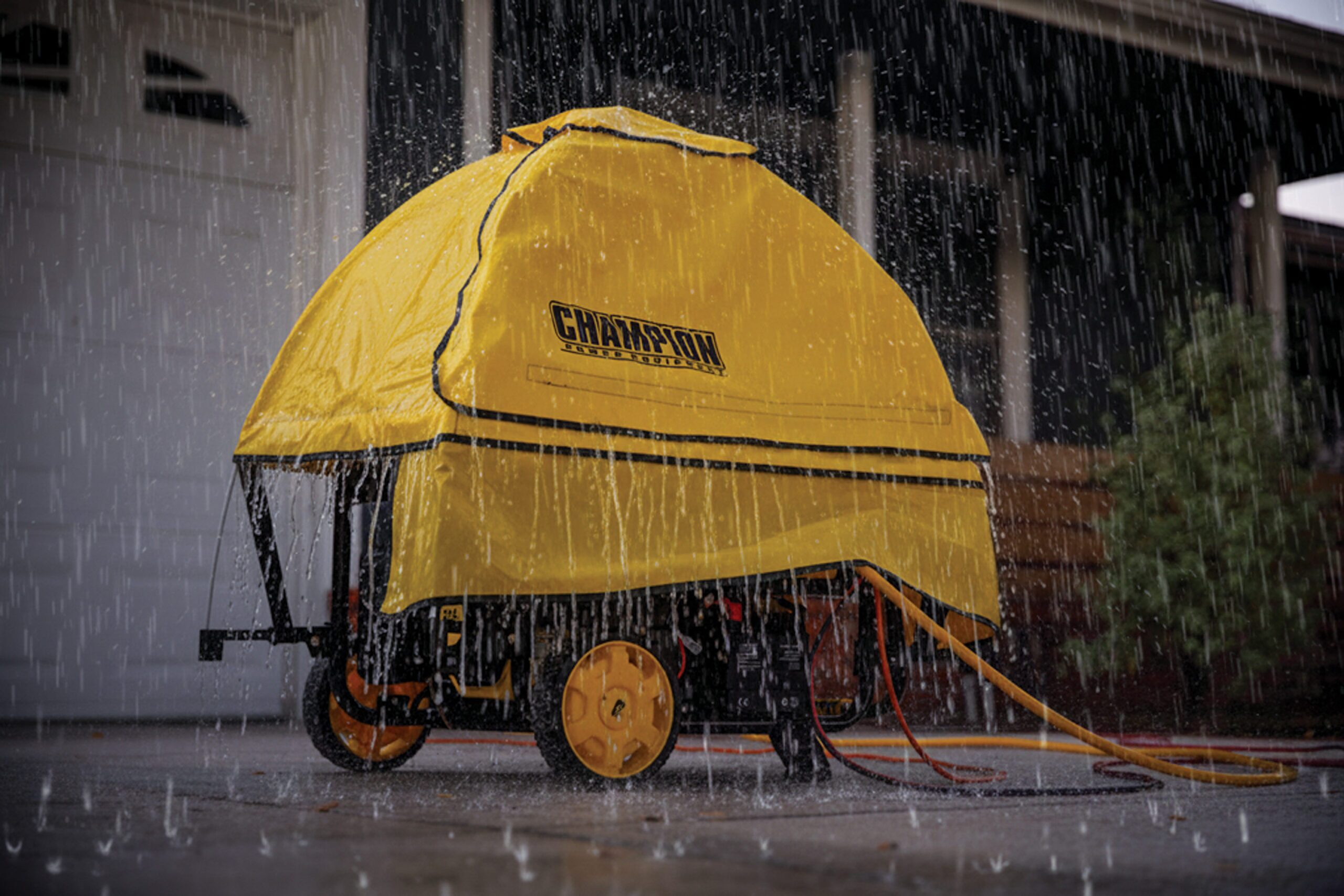
Following the manual, using approved accessories like Storm Shields for wet weather, and planning your setup in advance dramatically reduces risk. Always operate a portable generator outdoors in an open area on a flat, level surface away from any windows or doors and install working CO alarms. Reports indicate that CO-related injuries and fatalities linked to portable generators during storms and cold snaps are often preventable with correct placement and ventilation. If evaluating generators for rent, ensure you understand the unit’s fuel type, output, and safety features before use.
Carbon Monoxide Awareness
Carbon monoxide is a colorless, odorless gas created by fuel-burning engines. Even low levels can make you sick; higher concentrations can be fatal within minutes. Because CO is undetectable by smell or sight, rely on proper placement and functioning CO alarms. Champion’s CO Shield* technology provides added safety by automatically turning off the portable generator should it detect dangerous levels of CO.
*CO Shield is not a substitute for an indoor carbon monoxide alarm or for safe operation.
Generator safety precautions are key to generator safety:
- Symptoms of CO Poisoning: headaches, dizziness, nausea, confusion, weakness, and chest pain. Severe exposure may cause loss of consciousness.
- If exposure is suspected: move to fresh air immediately and call emergency services.
- Prevention: run generators only outdoors, at least 20 feet from windows, doors, and vents, with the exhaust directed away from the building. Never operate in garages, basements, crawlspaces, or enclosed porches—even with doors open.
- Install battery-powered or hardwired carbon monoxide detectors on every level of your home and test them regularly.
Safe Operating Procedures
Do
- Read the owner’s manual before use and follow all labels.
- Use heavy-duty, outdoor-rated extension cords with intact grounding.
- Keep the unit dry on a stable, level surface; use Storm Shields in wet weather.
- Refuel only when the engine is off and cool; store fuel in approved containers.
Don’t
- Do not run a generator indoors, in a garage, or under a carport.
- Avoid backfeeding the home through a wall outlet.
- Do not overload circuits or exceed rated wattage.
- Do not operate near combustible materials or block airflow around the unit.
Correct placement and ventilation are essential. Position the generator outdoors with at least 20 feet of clearance from openings and aim the exhaust away from structures. In rain or snow, use a Storm Shield designed for generator operation that maintain airflow and keep the unit dry.
Regular maintenance supports safety and reliability. Follow oil change intervals, inspect and replace air filters as needed, check fuel lines for cracks, test GFCI outlets, and run the generator periodically for at least 15 minutes. Replace worn cords and verify all connections are tight and undamaged.
Emergency Preparedness
Plan ahead for outages. Identify where the generator will sit, how it will connect to essential loads, and how you will store and rotate fuel. Keep a kit with spare oil, filters, spark plugs, and approved fuel containers. Confirm CO alarms work and inspect extension cords before each use. These steps reinforce portable generator safety when it matters most.
To power household circuits safely, use a professionally installed manual transfer switch or interlock kit that isolates your electrical system from the utility grid. This prevents backfeeding a generator, protects utility workers, and ensures the generator supplies only selected circuits. Never attempt to power your home by plugging the generator into a receptacle.
During severe weather, secure the generator on a stable surface, use a Storm Shield in wet conditions, and monitor wind direction to keep exhaust moving away from the home. Manage noise considerations, keep a fire extinguisher nearby, and always shut down and cool the unit before refueling. Prioritize these portable generator safety tips over convenience whenever you operate a generator, whether it’s your own unit or one sourced from renting.
Customer Support
Champion’s support team is ready whenever you need a hand—whether that’s a quick phone call or live chat. If you prefer a DIY approach, our Help Center is filled with easy, step-by-step guides and self-service tools. You can also head to our YouTube channel for helpful tutorials and troubleshooting videos to keep your equipment running strong.
*CO Shield technology monitors the accumulation of carbon monoxide (CO), a poisonous gas produced by engine exhaust. If CO Shield detects unsafe, elevated CO, it automatically shuts off the engine. CO Shield is not a substitute for an indoor carbon monoxide alarm or for safe operation. Never allow engine exhaust to enter a confined area through windows, doors, vents or other openings. Generators must ALWAYS be used outdoors, far from occupied buildings with engine exhaust pointed away from people and buildings. Meets ANSI/PGMA G300 requirements.