Fuel Face-Off: Gasoline, Propane, and Natural Gas Compared
Gasoline, propane, and natural gas each power portable generators with distinct advantages, and Dual or Tri Fuel models let you switch based on availability, cost, and conditions.
Choosing the right fuel for your portable generator affects everything from runtime and power output to storage, emissions, and how easily you can refuel during an outage. This guide breaks down how gasoline, propane, and natural gas each perform, where each fuel makes the most sense, and why Dual Fuel and Tri Fuel generators give you the flexibility to switch when conditions change.
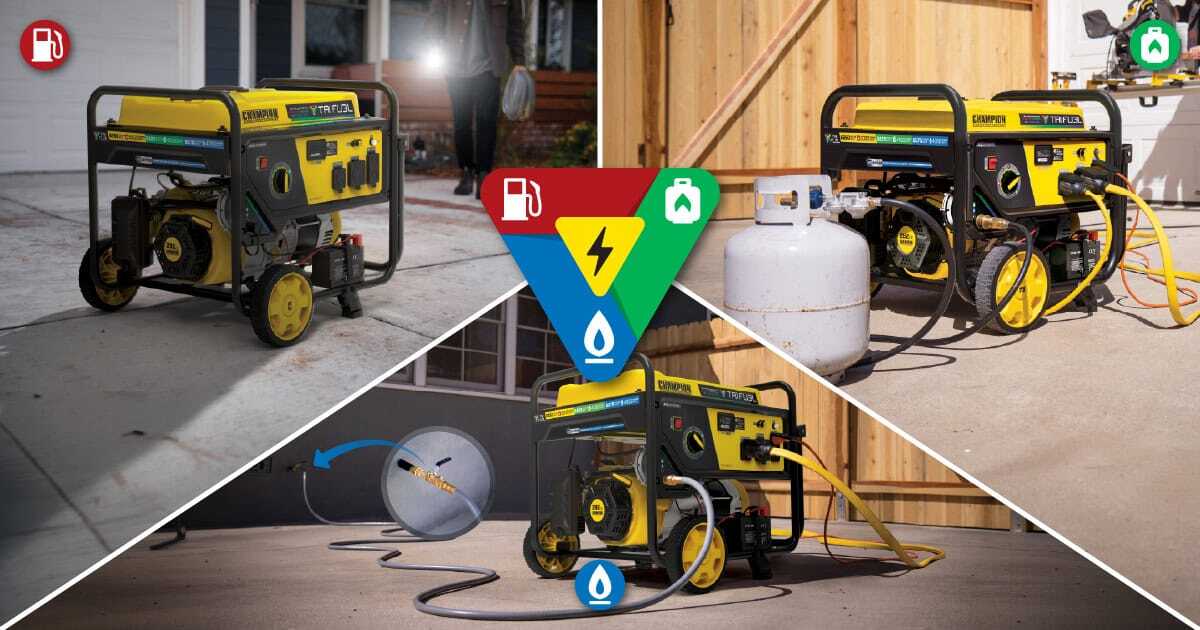
Understanding Generator Fuel Sources
When choosing a portable generator, one of the most important decisions involves selecting the right fuel source. Gasoline, propane, and natural gas are fossil fuels that each power generators effectively, but they differ in portability, fuel costs, storage requirements, environmental impact, and performance in different weather conditions.
For many homeowners, contractors, and outdoor enthusiasts, fuel flexibility is a major advantage. Dual Fuel and Tri Fuel generators allow users to switch between fuels depending on availability, making them especially useful during storms or power outages when fuel supplies may be limited.
Understanding how each energy source performs helps determine the best option for backup power, job sites, camping, or emergency preparedness.
Gasoline Generators: High Power and Easy Refills
Gasoline is the most widely used energy source for portable generators. Its availability at virtually every gas station makes refills quick and convenient, especially during short-term power outages or job site use.
Because gasoline contains a higher energy density, generators typically produce their maximum power output when running on gasoline. This makes gasoline an ideal option for applications where high starting wattage is required, such as running power tools, sump pumps, refrigerators, home heating, and other household appliances.
However, gasoline does have drawbacks. It has a relatively short shelf life and can begin degrading after several months if not stabilized. During large storms or emergencies, fuel shortages can also occur as people rush to fill containers.
Gasoline generators also produce exhaust emissions that contribute to their environmental impact.
Propane Generators: Cleaner-Burning and Reliable Storage
Propane has become an increasingly popular fuel source for portable generators thanks to its cleaner-burning properties and long-term storage benefits.
Unlike gasoline, propane does not degrade over time. Propane tanks and larger storage tanks can be stored for extended periods without affecting fuel quality, making them ideal for emergency preparedness. For homeowners who want backup power ready at any time, propane offers dependable cost-effectiveness and reliability.
Propane eliminates carburetor-related issues associated with gasoline, such as fuel degradation and clogging during storage. In addition, propane burns cleaner than gasoline, producing fewer emissions and reducing its environmental impact. This makes propane a lower-emissions energy source compared to many traditional fuels.
The main trade-off is slightly reduced power output. Generators running on propane typically produce a small reduction in wattage compared to gasoline because propane contains less energy per unit of volume.
Still, propane remains a versatile fuel that works well for camping, RVing, backup power, and remote job sites where portability and fuel storage safety matter.
Natural Gas Generators: Continuous Fuel Supply
Natural gas is another energy source available for certain generators, particularly Tri Fuel models designed to operate on gasoline, propane, or natural gas.
One of the biggest advantages of natural gas is its continuous gas supply. When connected to a residential gas line, a generator can run without requiring fuel refills, making it an attractive option for extended outages.
Natural gas offers a low-maintenance alternative to gasoline because it is supplied directly from a utility line, eliminating concerns about stale fuel and many carburetor issues caused by gasoline sitting unused for extended periods. It also burns more cleanly than gasoline, producing fewer emissions and lowering its overall environmental impact. For homeowners with access to a natural gas connection, this makes it a convenient and more eco-conscious fuel option for backup power.
However, natural gas generators require access to a home or commercial gas supply line, which limits their portability compared to gasoline or propane generators. In addition, power output is usually slightly lower than gasoline or propane when running on natural gas because it contains less energy per BTU/cubic foot.
For homeowners who already have natural gas service, a Tri Fuel generator connected to the home’s gas line can provide a convenient and reliable backup power solution.
Which Produces More Power?
When comparing generator fuels, gasoline typically delivers the highest power output. Most generators are rated for their maximum wattage using gasoline because it provides greater energy density.
Propane generators generally produce slightly less power, often around 5–10% lower output depending on the engine and generator design. Natural gas typically results in an even larger reduction in wattage.
While gasoline may provide maximum performance, propane and natural gas offer advantages in clean-burning operation, storage stability, and reduced environmental impact. For many users, the ability to switch* between fuels offers the best balance of performance and flexibility.
*The generator must always be turned off and allowed to cool before switching between fuel sources.
How Much Fuel Does a Portable Generator Use Per Hour?
Fuel consumption depends on the generator size, load level, and fuel source. A typical mid-size portable generator running at half load might use approximately:
- 0.6–0.75 gallons of gasoline per hour
- 1–1.2 gallons of propane per hour
- Natural gas consumption varies depending on gas pressure and generator design
Please note that standard portable generators and inverter generators have their fuel consumption rated at different loads. Standard portable generators are rated at 50% load, whereas inverters are measured at 25% load.
Actual usage varies based on engine efficiency, electrical load, and operating conditions. Generators operating under heavier loads will consume more fuel.
Fuel consumption also affects fuel costs and overall cost-effectiveness over time. In some regions, propane or natural gas may offer lower operating costs depending on local fuel prices and gas supply availability.
Is Gasoline, Propane, or Natural Gas Better for Cold Weather?
Cold temperatures can influence generator performance, especially when storing and handling fuel.
Gasoline performs reliably in cold weather, though it can degrade during long storage periods. Propane stores indefinitely but may experience reduced pressure in extremely low temperatures. Natural gas is also a dependable option in winter, providing a continuous fuel supply through your home’s utility line and eliminating the need to refuel or store fuel on-site. However, because it depends on an active gas utility connection, it may not be available in areas without natural gas service or during rare utility disruptions.
For most winter climates, gasoline, propane, and natural gas all perform well when generators are properly maintained and protected from harsh weather conditions. Proper fuel storage, maintenance, and safe operation practices help maintain reliable generator performance.
Regardless of the energy source, generators must always operate outdoors in well-ventilated areas to prevent carbon monoxide exposure.
Choosing the Right Generator Fuel
The best fuel for a portable generator depends on how and where it will be used. The best fuel type depends on usage:
- Gasoline: highest power output, easy on-site refills, but highly flammable.
- Propane: cleaner-burning, long storage, ideal for off-grid backup and emergency preparedness.
- Natural Gas: continuous supply for homes with gas service, convenient, and eco-friendly.
For many users, Dual Fuel or Tri Fuel generators offer the best combination of flexibility, energy efficiency, cost-effectiveness, and reduced environmental impact. The ability to switch fuels helps ensure power remains available even when one fuel source becomes difficult to obtain. By understanding the differences between gasoline, propane, and natural gas, generator owners can choose the energy source that best fits their needs for backup power, outdoor activities, or job site electricity.
From Fuel Choice to Reliable Power
Champion Power Equipment offers a full lineup of portable generators designed to meet a wide range of power needs. Dual Fuel models operate on either gasoline or propane, giving you added flexibility during power outages or fuel shortages. Tri Fuel models also run on natural gas, making them an excellent option for homes with utility service by providing continuous backup power without the need to refuel. Whether you need portable power for a job site, reliable backup for your home, or the convenience of multiple fuel options, there’s a Champion generator built for the task.
Every Champion generator includes free lifetime technical support by phone, email, or live chat, in addition to the product warranty. Visit the Help Center for how-to guides and self-service resources, explore our YouTube channel for tutorials and troubleshooting videos, or contact our support team anytime for assistance in getting the most from your generator.