How to Store a Generator when Not in Use
To store a generator when not in use, clean and inspect the unit, perform any required maintenance, and prepare the fuel system according to the owner’s manual. Store the generator in a cool, dry, well-ventilated location away from direct sunlight and moisture, and use a protective cover to help prevent dust and environmental damage.
Properly storing your portable generator is an essential task that keeps your machine in optimal shape for when you need it most. Whether you rely on your generator during power outages or for camping trips, knowing how to store a portable, inverter, or dual-fuel generators properly ensures it’s always ready to go. In this guide, we’ll walk you through the steps of preparing and storing a generator, including vital small engine cleaning and proper maintenance tasks, for long-term storage . We’ll also discuss how to protect your generator from environmental factors, keeping it ready for action whenever the need arises.
Preparing Your Generator for Storage
Before storing a generator for a while, you’ll want to ensure it’s in prime condition for the next use.
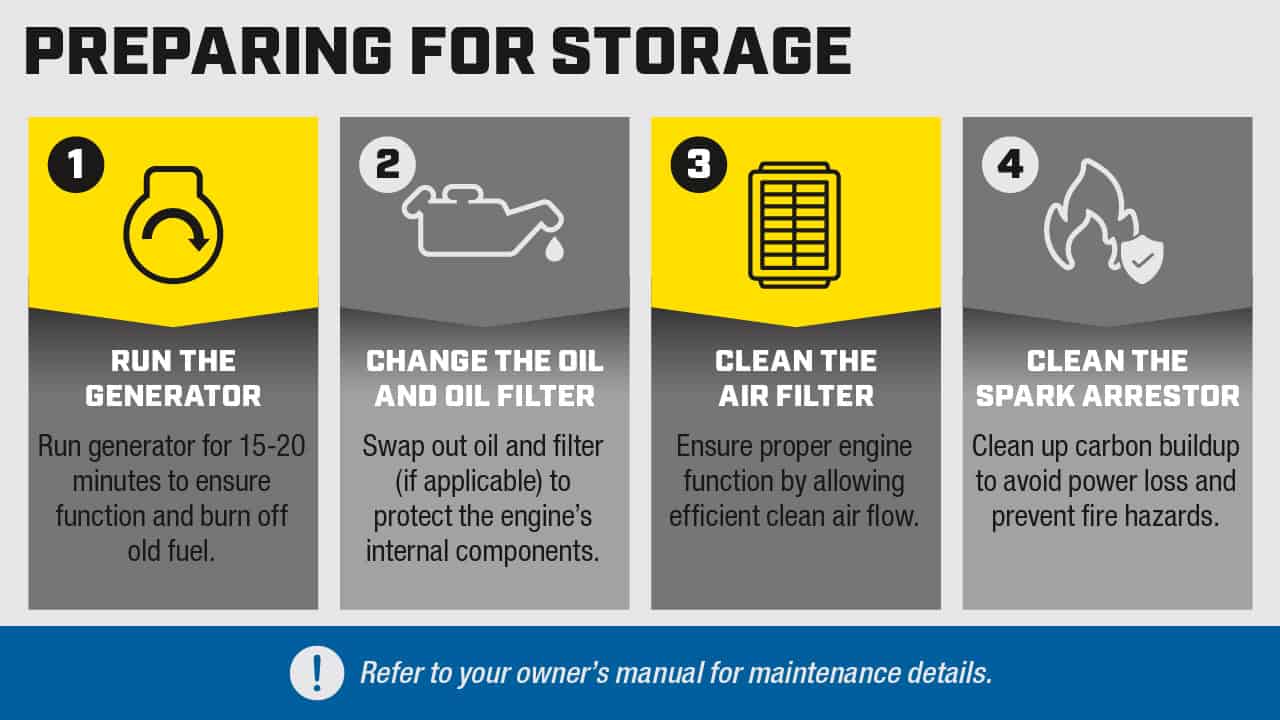
- Start by running the generator for a short period (15-20 minutes) to make sure everything’s functioning correctly. This process also helps burn off any leftover fuel in the carburetor, which is key in preventing issues related to old gasoline.
- Change the oil and oil filter (12,000-watt units and above only). Old generator engine oil can contain particles that might cause engine wear if left unattended. By swapping out the oil and verifying proper oil levels, you help protect the engine’s internal components and maintain smooth operation.
- Clean the air filter. A clean air filter is vital for proper engine function, as it ensures the engine receives the right amount of clean air. If the filter’s clogged or dirty, it can restrict airflow, reducing efficiency and possibly harming the engine. So, take a few minutes to clean or replace it as needed.
- Clean your portable generator’s spark arrestor. If the arrestor contains too much carbon buildup, engine performance will hinder, can surge, or experience power loss. Keeping it clean also helps prevent fire hazards.
By following these steps, you’ll set yourself up for successful generator storage and reliable future use.
Pre-Storage Cleaning and Maintenance
Cleaning and maintenance are crucial before you tuck your generator away for an extended period.
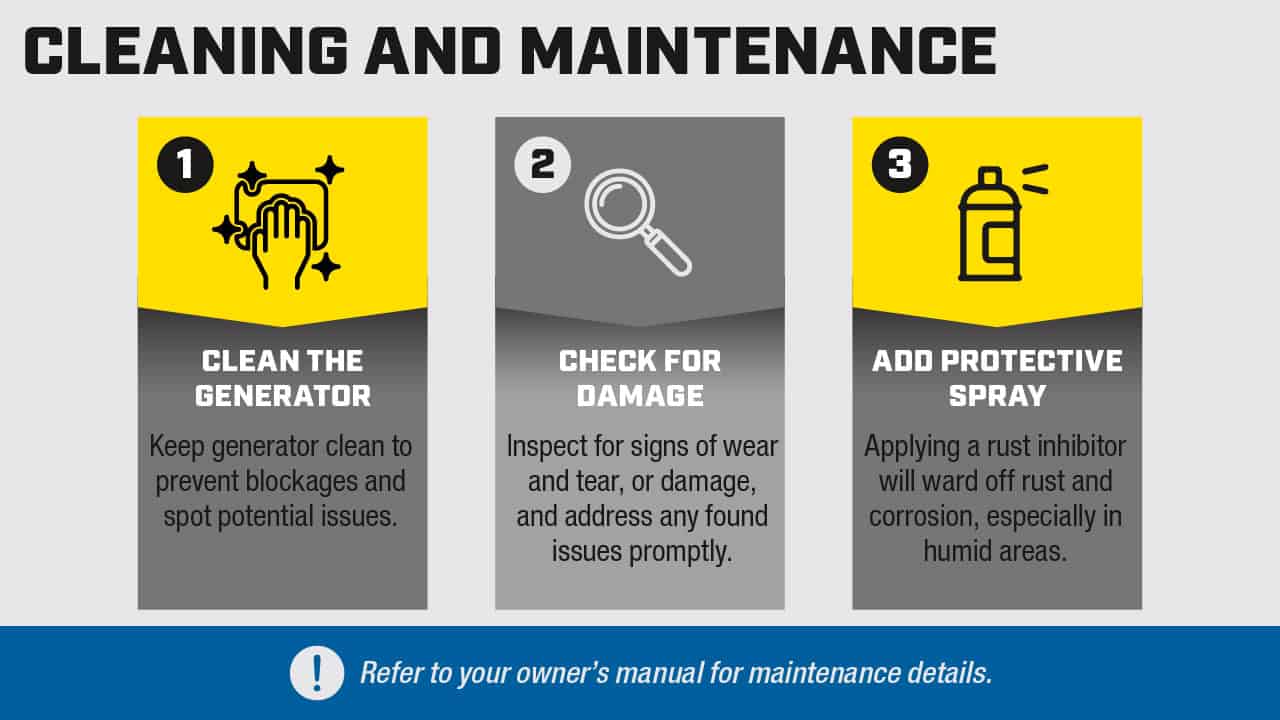
- Wipe off any debris from the exterior using a soft cloth. Pay special attention to the air intake and exhaust areas to prevent blockages. A clean surface not only looks good but also helps you spot any potential issues that might need fixing.
- Check for signs of wear or damage as well. Inspect the generator’s casing, fuel lines, and electrical connections for any cracks or fraying. Addressing these issues before storage can save you from headaches down the road. If you spot significant damage, consult your generator’s owner’s manual for advice on repairs or replacements.
- Apply a protective spray to ward off rust and corrosion. A good rust inhibitor can be valuable, especially if your generator will be in a humid area. This little step goes a long way in maintaining your generator’s condition.
By taking care of these cleaning and maintenance tasks, you ensure your generator remains in great shape, ready for whatever comes next. For a full guide on generator maintenance*, check out our generator maintenance checklist.
- Always refer to your portable generator’s owner’s manual for model-specific maintenance information.
Safe Generator Storage Best Practices
When it comes to generator storage, location is crucial. Choose a dry, cool spot away from direct sunlight, like a well-ventilated garage or shed. Avoiding excessive heat and humidity helps protect your generator’s components and fuel system.
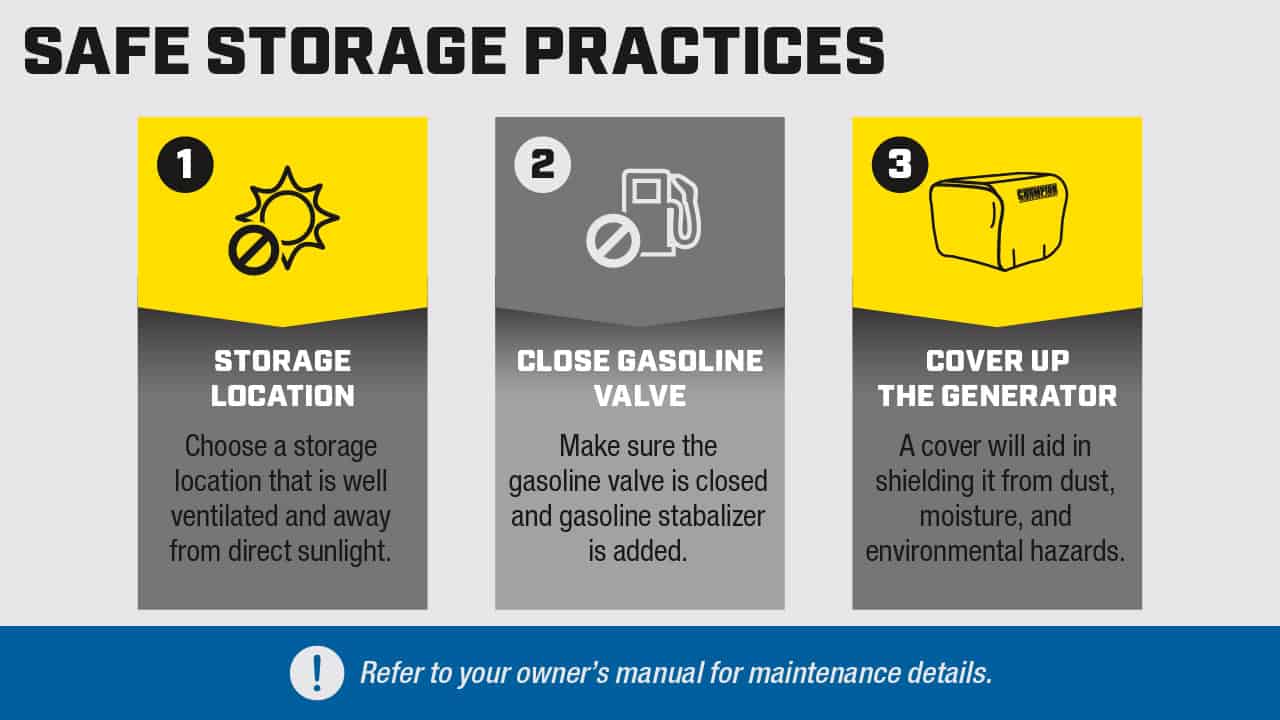
Before storing your generator, make sure the gas valve is closed and use a generator gas fuel stabilizer. A generator gas stabilizer prevents gasoline from deteriorating, which could lead to hard starts or engine troubles later. Run the generator for a few minutes with the stabilizer so the whole system benefits. Let it cool completely before stowing it away.
Consider covering your generator to shield it from dust and moisture with a protective cover for portable generators or inverters. A quality cover keeps your generator safe from environmental hazards, helping to maintain its appearance and functionality.
Lastly, is it safe to store a generator in a garage? The answer is yes, as long as it’s well-ventilated and the generator is cool before storage. This ensures safe and effective generator storage for long periods.
Generator Storage Locations
Knowing where to store a generator when not in use is crucial for its longevity. A well-ventilated garage or a dedicated outdoor shed can be ideal locations, provided they are dry and shielded from direct sunlight. Proper generator storage not only keeps your equipment in working order but also ensures safety.
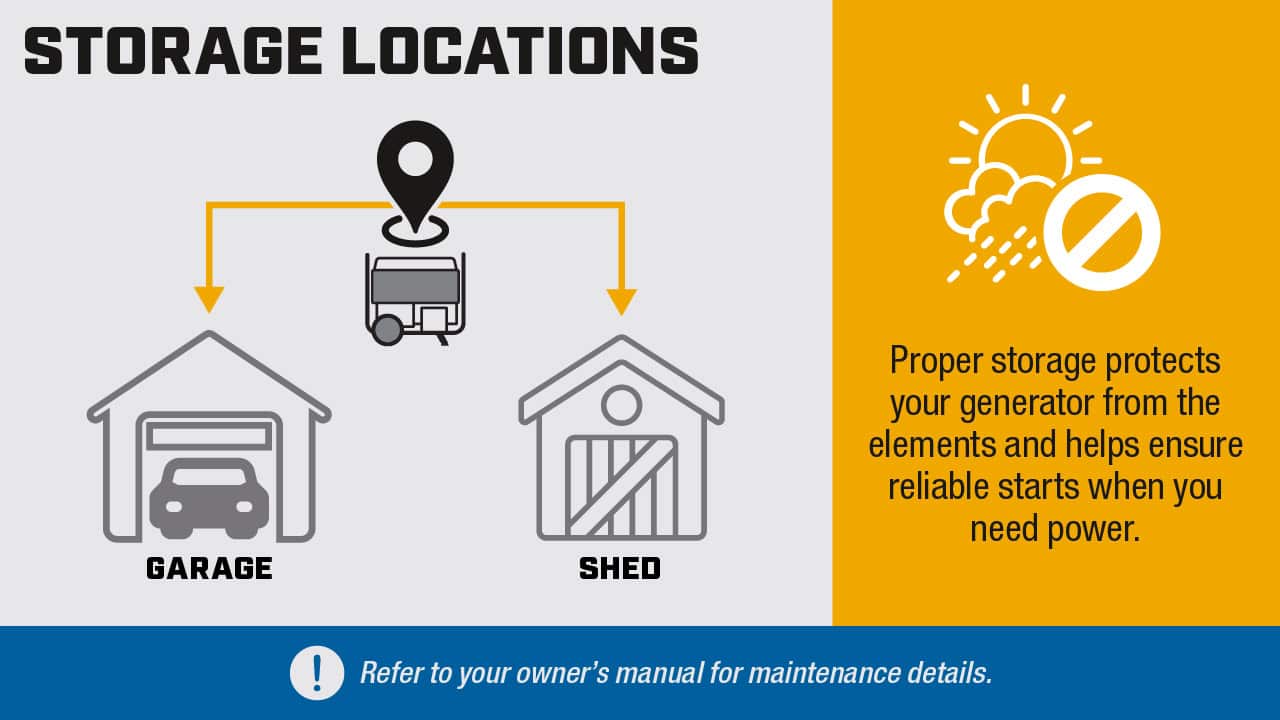
By storing a generator in a location that meets these conditions, you minimize the risk of damage from environmental factors. Always remember to use a generator gas stabilizer to maintain fuel quality, replace the spark plug, as it helps prevent fouling and corrosion, ensuring your generator starts reliably and runs efficiently when you need it again, and routinely check the condition of your generator to prevent long-term issues.
Frequently Asked Questions
How long can a generator sit without being used? A generator can sit unused for several months or longer when properly prepared for storage. However, gasoline can deteriorate over time, potentially causing fuel system issues and hard starting. Follow the manufacturer’s recommendations for fuel stabilization, draining, and periodic maintenance to keep your generator ready for its next use.
Should I drain the gas from my generator before storing it? It depends on how long you plan to store the generator and the manufacturer’s recommendations. For extended storage, some generators require draining the fuel tank and carburetor, disconnecting fuels like propane, while others can be stored with treated fuel and an appropriate fuel stabilizer. Always consult your owner’s manual for the correct procedure.
Can I store my generator in a garage or shed? Yes. A generator can be stored in a garage or shed if the location is dry, protected from excessive heat and moisture, and provides adequate clearance for safe storage. Always allow the generator to cool completely before putting it away. Never operate a generator inside a garage, shed, or other enclosed space because of the risk of carbon monoxide poisoning.
Should I cover my generator when it’s not in use? Yes. A properly fitted generator cover helps protect the unit from dust, moisture, and other environmental elements while in storage. Make sure the generator has cooled completely before covering it, and use a cover designed for your specific generator type.
Customer Support
Proper generator storage and routine maintenance help protect your investment and ensure your equipment is ready when you need it. Following the recommended storage procedures in your owner’s manual can help prevent fuel-related issues, reduce unnecessary wear, and extend your generator’s service life.
Have questions about preparing your generator for storage or maintaining your equipment? Champion Power Equipment offers several support options to help. Our support team is available by phone or live chat, while our Help Center provides easy-to-follow guides and self-service resources. You can also visit our YouTube channel for additional tutorials and troubleshooting videos.