News & Updates

Tailgate Generators

September 17, 2025

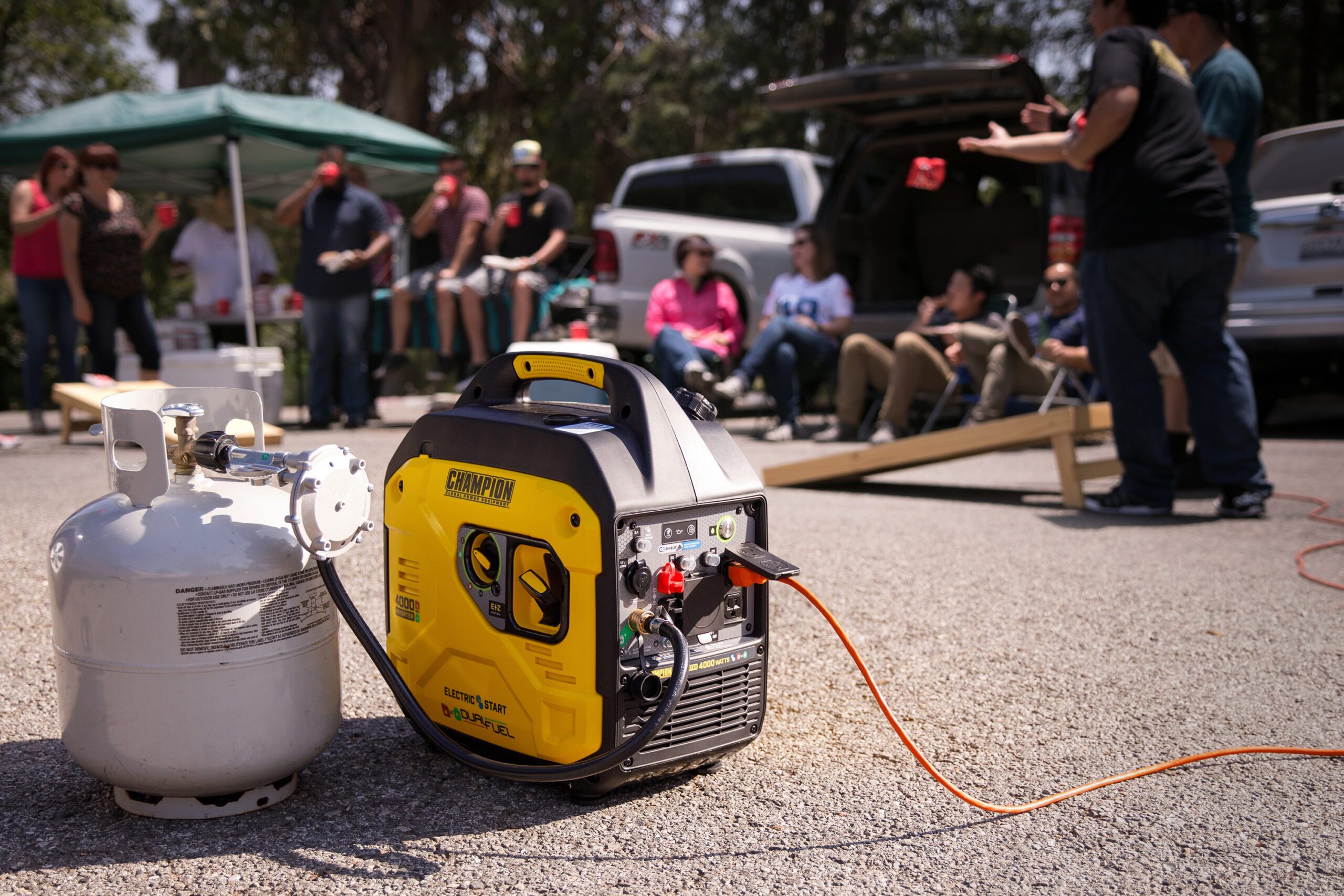
The best generator for tailgating is a quiet, lightweight inverter generator, or a portable power station for silent, engine-free power, with enough running and starting watts to cover your grill, cooler, TV, and speakers.

A tailgate generator serves as a practical solution, offering portable and efficient energy to ensure your devices operate smoothly. Whether you’re firing up a grill, charging gadgets, or powering TVs, Champion Power Equipment’s tailgate generators are crafted to be the best portable generators for tailgating in diverse settings. With an emphasis on durability and user-friendly features, these generators allow you to savor your tailgating experience without the concern of power shortages. Explore how our tailgate generators can enhance your next adventure or project, providing convenience and reliability when it’s most needed.
201511 lifestyle 14

Benefits of a Tailgate Generator

A tailgator generator is an indispensable companion for outdoor enthusiasts, providing ease of transport and remarkable portability. Constructed with lightweight materials and compact designs, our tailgating generators are easy to load into your vehicle, making them ideal for tailgating parties, camping trips, or any outdoor occasion. They allow you to bring power wherever you go, ensuring there’s no compromise between convenience and energy supply.

Our generators, like a portable inverter generator for tailgating or solar generator, are engineered for versatility, supporting a wide array of outdoor activities. From powering portable grills and coolers to supplying electricity for lights and audio systems, they adapt to various needs. Whether you’re hosting a tailgate event, spending a weekend in the wilderness, or needing backup power during a family barbecue, our generators facilitate a seamless experience, keeping interruptions at bay.

Furthermore, these generators excel at powering essential devices and appliances. With multiple outlet options, you can connect anything from smartphones and laptops to larger equipment with ease. This ensures your devices stay charged, meals are cooked, and entertainment continues uninterrupted. With our tailgate generators, enjoy the outdoors while ensuring all your power requirements are met efficiently.

Key Features of Tailgate Generators

Having the right tailgator generator can significantly enhance your experience. One of the primary considerations is the wattage requirement. Depending on whether you’re powering a grill, cooler, or other devices, choosing a generator with adequate power is crucial. Champion Power Equipment offers a selection of tailgate generators with sufficient wattage to meet all your tailgating needs.

Fuel efficiency, run time, and options are also important factors. Our tailgate generators are designed with flexibility in mind, offering both gasoline and propane fuel options. This dual fuel generator capability enhances efficiency and allows you to select the fuel type that suits your environment.

Noise level is another consideration when selecting a tailgate generator. Nobody wants to disrupt the party atmosphere with excessive noise. We prioritize quiet technology in tailgate generators, like portable power stations that do not have an engine, meaning no fuel is required, nor do they make any noise, allowing them to operate inside. These features enable lively conversations and the enjoyment of game sounds without the distraction of a loud machine. Our products maintain a peaceful tailgating experience while providing reliable power.

Selecting the Right Tailgate Generator

Choosing the appropriate tailgate generator ensures you have the power needed for outdoor events and tailgating parties. Begin by evaluating your power needs: consider the appliances and devices you plan to operate. Calculate the total wattage required, considering both starting and running watts, to determine the generator’s output capacity necessary for seamless operation. Check out our nifty Wattage Reference Chart to help guide you on wattage requirements.

Understanding generator types and specifications is also vital. Tailgate generators generally come in three main types: inverter generators, solar generators, and conventional generators. An inverter for tailgating is quieter, more fuel-efficient, and provides stable power for sensitive electronics, making it suitable for tailgating. In contrast, conventional generators usually offer more power output but their decibel ratings may be higher. Solar generators recharged by a solar panel do not have an engine, meaning no fuel is required, nor do they make any noise. They can also be operated indoors.

Champion Power Equipment provides a variety of generators tailored for different needs, ensuring you find the right specifications for your tailgate experience.

Lastly, evaluating size and weight for transport is crucial. The ideal tailgate generator should be portable, facilitating easy transport in your vehicle. Look for lightweight options with built-in handles or wheels for convenient mobility. Champion Power Equipment’s tailgating generators are designed with portability in mind, ensuring they accompany you on all your adventures.

Safety and Maintenance Guidelines

For a successful tailgate party, proper use and placement of your tailgate generator are essential. Always set up your inverter or standard portable generator on a flat, stable surface, away from foot traffic and flammable materials. Position it outdoors, as running a generator indoors can lead to dangerous carbon monoxide buildup. Additionally, keep the generator at least 10 feet away from vehicles and any tents or canopies to prevent harm from heat and exhaust, as well as any windows or doors on an RV.

Routine maintenance is vital for extending the life of your Champion tailgate generator. Regularly check oil levels and change the oil as recommended in the owner’s manual to keep the engine in top condition. Cleaning or replacing the air filter is also crucial for optimal performance, especially in dusty environments common at tailgating venues. Ensure the fuel system is inspected and the fuel is fresh, as stale gasoline can cause starting issues.

Safety precautions are paramount when using your generator. Always use a heavy-duty extension cord rated for outdoor use and avoid overloading the generator. Consider investing in a generator with built-in safety features, such as low-oil shutdown and overload protection, which all generators mentioned in this blog come equipped with. Familiarize yourself with the owner’s manual to understand safety protocols. By following these guidelines, you can enjoy a secure tailgating experience while maximizing the performance and longevity of your Champion tailgate generator.

Frequently Asked Questions

What size generator do I need for tailgating? Add up the running watts of everything you plan to power at the same time, then add the highest single starting watt surge from any motorized item, like a cooler or blender. Use Champion’s wattage reference chart to estimate each device, and choose a generator with a little extra capacity as a buffer.

What type of generator is best for tailgating? Inverter generators are a popular choice because they’re quieter, more fuel-efficient, and produce stable power that’s safe for phones, laptops, and TVs. Portable power stations have no engine, so they run silently with no fuel and can even be used indoors. Conventional generators usually offer more power but can be louder.

Are tailgate generators loud? It depends on the type. Inverter generators are generally quieter than conventional models because the engine adjusts its speed to the load, and power stations make no engine noise at all. Check each model’s decibel rating if noise is a priority.

How far should I keep a generator from my vehicle, tent, or canopy? Keep it at least 10 feet away from vehicles, tents, canopies, and any RV windows or doors. Always run it outdoors on a flat, stable surface away from foot traffic and flammable materials, never indoors, because of carbon monoxide.

What can I power with a tailgate generator? Common tailgate items include TVs, speakers, lights, coolers, slow cookers, and phone and laptop chargers. Heating appliances like electric griddles and portable heaters draw high continuous watts, so add them up carefully before choosing a size.

Customer Support

From calculating your wattage needs to choosing the right features for your tailgate setup, finding the right generator can feel like a lot to tackle. If you still have questions about which Champion generator fits your game-day setup, our support team is here for you—by phone or live chat. Prefer to handle things on your own? Explore our Help Center, packed with step-by-step guides and self-service tools. Or visit our YouTube channel for tutorials and troubleshooting videos designed to keep you up and running.
A Comprehensive Guide to House Generator Hook Up

August 14, 2025

To hook up a generator to your house, you’ll need either an extension cord setup for basic use, a manual transfer switch (MTS) paired with a power inlet box connecting the generator directly to your home’s electrical panel for a safer, more complete solution, or a StartLINK-equipped generator paired with a compatible Energy Storage System (ESS) or Automatic Transfer Switch (ATS) for fully automatic power during an outage.

This guide walks you through these items, plus the safety precautions, along with newer options like StartLINK-enabled generators that can automate the process entirely. Whether you’re dealing with power outages or preparing for adverse weather conditions, having a reliable house generator hook up can keep your home powered during crucial times.

Disclaimer: At Champion, your safety is our top priority. This guide is meant to provide general information to help you better understand generator connection options. Always consult a licensed electrician before attempting any electrical work, and follow all local codes, regulations, and permit requirements. Improper installation can lead to serious injury, property damage, or even death. When in doubt, leave it to the pros—your safety and your home are worth it.

Understanding House Generator Hook Ups

When unexpected power outages occur, knowing how to connect a generator to your house becomes vital for maintaining safety and comfort. A dependable generator hook up offers peace of mind and convenience, ensuring that daily routines are uninterrupted. Without proper hook ups, backup generators can be ineffective, leaving your home vulnerable during blackouts.

Various generators run on different fuel sources like propane or gasoline and are suitable for home use, each tailored to different needs. Portable generators are favored for their mobility, making them ideal for short-term outages or recreational activities. Home standby generators, however, are permanently installed and automatically activate during power failures using automatic transfer switches, ensuring continuous operation of essential appliances and systems. Understanding these options, and what size generator you actually need, helps homeowners select a generator that meets their specific requirements.

One significant advantage of having a generator hook up is the swift restoration of electricity, reducing disruption. This is crucial for families dependent on medicine that require refrigeration. With a proper setup, you can maintain heating, cooling, and lighting during emergencies.

Safety Precautions for Generator Connections

Ensuring safety during generator installation is paramount. An improper hook up or placement can lead to risks such as electrical fires, carbon monoxide poisoning, and damage to electrical systems. Adhering to manufacturer guidelines and employing safe practices can mitigate these hazards.

A common mistake in how you connect a generator to your house is the absence of a transfer switch or interlock kit . Without this device, backfeeding may occur, posing dangers to utility workers and your home. Additionally, improper connections or circuit overloads can result in overheating and damage. Using accessories like Champion’s manual transfer switches, paired with a generator inlet box, ensures safe and efficient generator operation.

Compliance with local electrical codes and regulations is crucial during installation. These standards protect you, your property, and the community from electrical risks. Local authorities often require permits for generator installations, and non-compliance can lead to fines or necessitate reinstallation. Consulting with a licensed electrician and understanding local requirements ensures your generator setup is safe and compliant.

Types of Generator Hook Ups

Extensions Cords

Extension cords are a good starting point for connecting your portable generator. When using this method, keep the generator at least 25 feet away from your home, and run the cords through windows or doors.* However, you’ll be limited by the number of available outlets and may not be able to power essential hardwired appliances.

*When running cords inside, crack a door or window only as much as you need, and seal around the opening to keep exhaust out.

Manual Transfer Switches

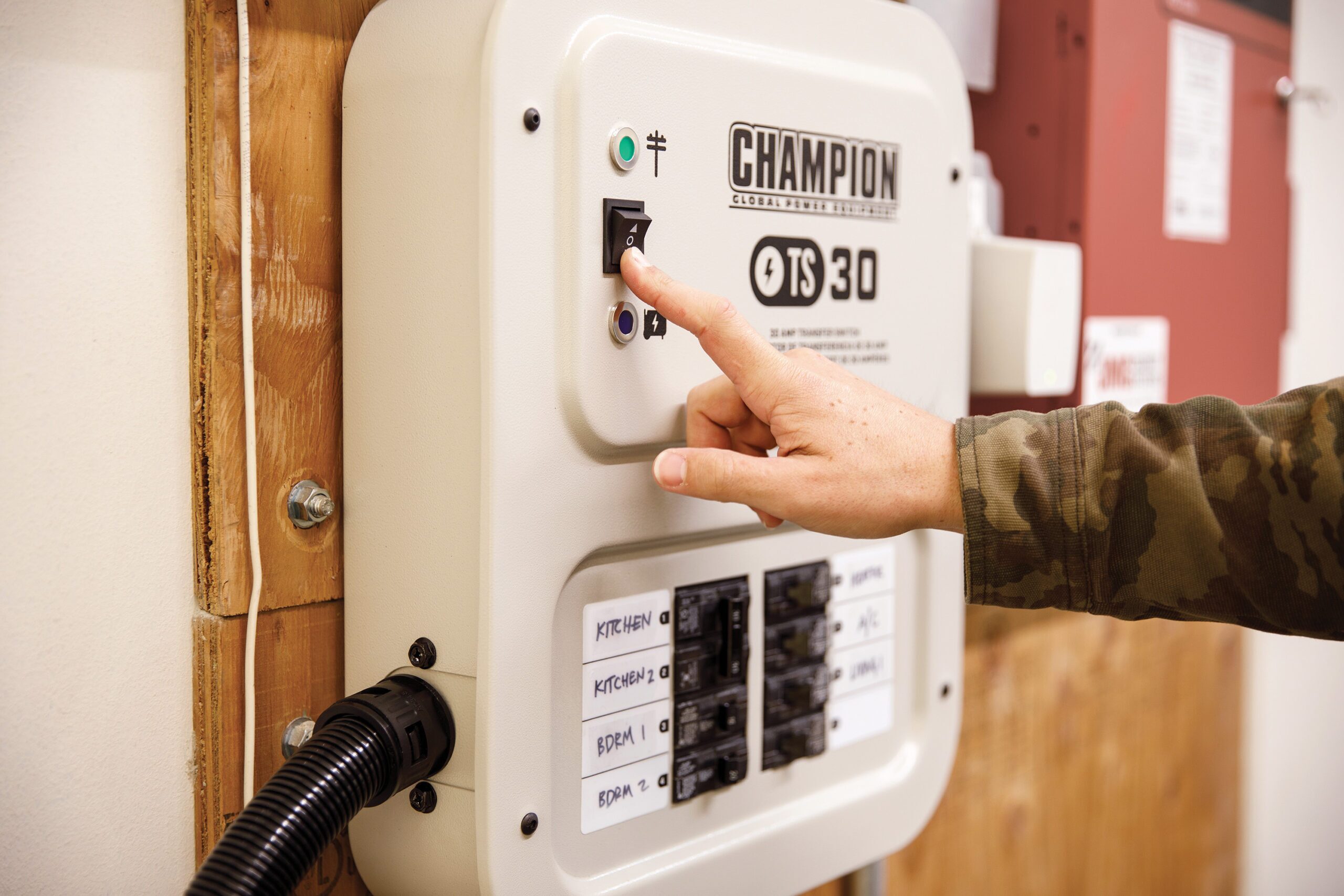
For a better solution, consider an MTS setup. Recommended for residential use, an MTS securely connects your generator to your home’s electrical panel. This setup allows you to easily switch between utility and generator power, helps prevent dangerous backfeeding into the grid, and protects both utility workers and your home’s electrical system.

201192 lifestyle 4

Understanding plug types and their compatibility with your generator is vital. Common types include NEMA L14-30 (30-amp) and 14-50 (50-amp), designed for various power ratings and applications. Matching your generator’s output with your home’s input requirements — you can check your appliances’ power draw against this wattage reference chart — ensures efficient operation and prevents equipment damage.

Interlock Kits

An interlock kit is a mechanical safety device that mounts directly on your home’s main electrical panel, physically preventing your main utility breaker and a generator breaker from being switched on at the same time. This eliminates the risk of backfeeding into the grid without requiring a separate transfer switch box, making it a more affordable alternative to an MTS while still letting you power any circuit in your panel rather than a preselected few. Like other panel-based setups, installation should be handled by a licensed electrician to ensure compatibility and code compliance.

StartLINK: Wired Auto Start/Stop

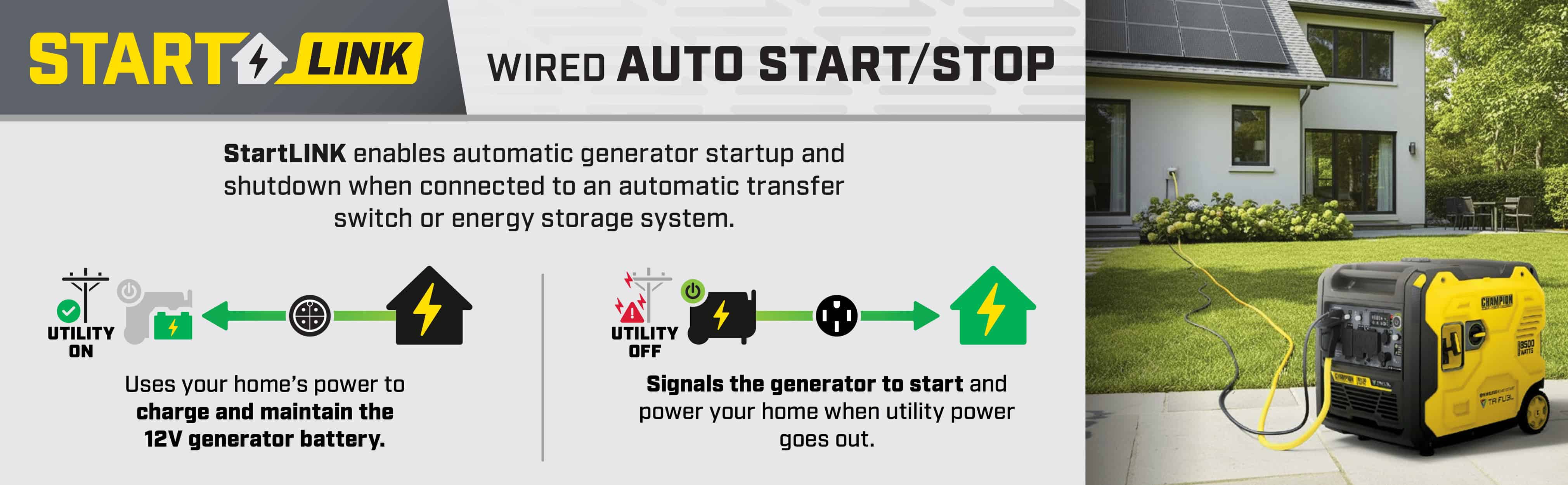
For homeowners who want backup power without manually starting a generator during an outage, Champion’s StartLINK technology offers a middle ground between a basic portable generator and a full home standby system. StartLINK provides a wired connection between a compatible Champion generator or inverter and an automatic transfer switch (ATS) or energy storage system (ESS), enabling automatic start/stop. When the utility is on, it also delivers 120V AC to keep your generator’s battery charged, so it’s ready to go when the power drops. There’s no walking outside in a storm to pull-start a generator.

201537 Amazon A+

StartLINK works with two types of connection:

  • With an ATS: The transfer switch detects the outage, signals the generator to start, and switches your home’s circuits to generator power once it’s running. When utility power returns, it switches back and shuts the generator down.
  • With an ESS: An ESS is a battery-based backup unit connected to your home’s essential circuits. During an outage, the ESS powers those circuits from its batteries while the generator stays on standby. When the battery charge drops to a level you set, StartLINK starts the generator to recharge the batteries back to your target level. Because the generator runs only when the batteries need charging, it doesn’t have to run for the entire outage.

This makes StartLINK-equipped inverters a strong option for anyone who wants the portability and lower cost of a portable generator, but with the hands-off convenience typically associated with permanently installed home standby systems.

Champion offers StartLINK on select portable generator and inverter models, giving compatible units convenient automatic starting capabilities when the power goes out.

What You’ll Need

A successful generator hook up starts with having the right equipment on hand. At minimum, this means a compatible portable generator, a transfer switch (manual or StartLINK-compatible automatic one), and a power inlet box to create a safe, weatherproof connection point between your generator and your home’s electrical panel. Since installation involves working inside the panel itself, the hands-on work of securing wiring and verifying connections is best left to your licensed electrician. Your job is making sure the right equipment is on hand before they arrive.

Champion Power Equipment offers accessories like transfer switches and power inlet boxes to enhance generator functionality. Additional equipment may be needed for a comprehensive generator hook up. High-quality extension cords are vital for connecting your generator to the inlet box. Choose cords rated for outdoor use and capable of handling your generator’s wattage.

Selecting suitable generator accessories involves considering specific power needs and the appliances you intend to run. Compatibility with your generator model and wattage requirements is essential. Champion Power Equipment provides durable, easy-to-install accessories that meet safety standards and ensure optimal performance. Equipping yourself with the right items and accessories ensures a seamless and efficient generator hook up.

What to Expect When Connecting a Generator to Your House

Connecting a portable generator to your home gives you a reliable power source during outages. So, how do you connect a generator to your house?

There are two main ways to do it: a manual transfer switch, where you start the generator and switch circuits over yourself, or an automatic setup, where the generator starts and takes over on its own when the power goes out. Automatic setups have traditionally meant a permanently installed home standby generator. Newer options like Champion’s StartLINK technology now bring that same hands-off convenience to select portable inverter generators. Both approaches connect the generator to your home’s electrical panel through a transfer switch. That’s the device that keeps generator power and utility power separate and prevents dangerous backfeeding into the grid.

Either way, the installation involves working inside your electrical panel, so it should be handled by a licensed electrician. They can help you choose the right setup for your home, handle any required permits, and make sure everything meets local code. Below is a general look at what each installation involves and what using it during an outage is like.

Rockhill Farm, 2024.

Installing a Manual Transfer Switch

An MTS setup starts with the transfer switch itself. It’s usually mounted on the wall next to your home’s main electrical panel and wired into that panel by a licensed electrician. Before any wiring begins, the electrician shuts off the main breaker so the panel is de-energized.

Next, you choose which circuits the switch will cover. Most manual transfer switches handle a set number of circuits, so you’ll decide ahead of time which ones matter most during an outage: the refrigerator, furnace fan, well pump, sump pump, lighting, or a few key outlets. The electrician then moves those circuits from the main panel to the transfer switch, where each one can be switched between utility power and generator power.

The final piece is the power inlet box. It’s mounted on an exterior wall and wired to the transfer switch, giving you a weatherproof connection point outside your home. Inlet boxes come in 30- or 50-amp versions, matched to your generator’s outlet (typically NEMA L14-30 or 14-50). With the inlet box in place, you don’t need to run extension cords through windows or doors during an outage.

Once everything is installed, here’s what a typical outage looks like. You set the generator at least 25 feet from your home, connect it to the inlet box with a power cord rated for its amperage, and start it. After the generator stabilizes, you flip your selected circuits over to generator power. Moving them one at a time helps avoid overloading the generator with startup surges. When utility power comes back, you reverse the process: switch the circuits back to utility, shut the generator down, and disconnect the cord.

Before you rely on your setup, have your electrician test it with the generator running to confirm each circuit works as expected. After that, regular generator maintenance (oil changes, air filter, spark plug, and fuel system checks as described in your owner’s manual) keeps it ready for the next outage.

Installing a StartLINK Automatic Transfer Switch

On the installation side, a StartLINK setup looks a lot like an MTS setup. The difference is what happens when the power goes out. A licensed electrician mounts the ATS near your main electrical panel and wires it in, covering the circuits you’ve chosen to back up. Like an MTS, the system also needs a power connection point for the generator outside your home. In addition, there’s a StartLINK wired connection between the generator and the ATS. That connection is what lets the two communicate.

Because the system is designed to start on its own, the generator needs a spot where it can stay connected and ready. That spot should be at least 25 feet from windows, doors, and vents, with at least five feet of clearance on all sides. If you have a tri-fuel StartLINK model, a natural gas connection installed by a qualified professional can let the generator run through longer outages without refueling.

Day to day, the system works quietly in the background. While utility power is on, StartLINK supplies 120V AC to keep the generator’s battery charged. When an outage hits, the ATS detects the loss of utility power and signals the generator to start. Once the generator is running steadily, the ATS transfers your selected circuits to generator power. There are no trips outside and no switches to flip. When utility power returns, the ATS moves your circuits back to utility and signals the generator to shut down.

Automatic doesn’t mean maintenance-free. You’ll still want to keep the generator fueled (if it isn’t on natural gas), follow the maintenance schedule in your owner’s manual, and check periodically that it’s connected and ready.

Frequently Asked Questions

Can I plug my generator directly into a wall outlet? No. Plugging a generator directly into a wall outlet, sometimes called “backfeeding”, is extremely dangerous and prohibited by electrical codes in most areas. It can send electricity back through the grid, putting utility workers at risk, and can severely damage your home’s electrical system. Always use a properly installed transfer switch or inlet box instead.

How far away from my house should I place my generator? Your generator should be positioned at least 25 feet away from windows, doors, and vents, with at least five feet of clearance on all sides, to prevent carbon monoxide from entering your home.

Do I need an electrician to install a generator hook up? While simple extension cord setups don’t require an electrician, installing a manual transfer switch or interlock kit involves working with your home’s electrical panel and should always be done by, or under the guidance of, a licensed electrician to ensure it’s safe and up to code.

Can a generator automatically turn on during a power outage? Yes, but this typically requires either a home standby generator with an ATS, or a portable generator equipped with StartLINK technology connected to a compatible ATS or ESS.

What’s the difference between StartLINK and a standard manual transfer switch? A standard manual transfer switch still requires you to manually start the generator and flip the switch yourself once the power goes out. StartLINK removes that manual step, as the generator connects to a compatible ATS or ESS and starts automatically when the ATS or ESS detects an outage, while also keeping the generator’s battery charged and ready at all times.

Does a StartLINK generator require professional installation? The generator itself doesn’t require installation since it’s portable, but the ATS or ESS it connects to does. Since those components are wired into your home’s electrical panel, that part of the setup should be handled by a licensed electrician, just like any other transfer switch installation.

Customer Support

Following these recommendations ensures your generator is ready to provide power when needed. Of course, even with a clear guide, generator hook ups can raise questions specific to your home’s setup, and that’s exactly where our support team comes in.

At Champion, we’re here for you with 24/7 customer support. Whether you need immediate assistance, available by phone or live chat, or prefer to tackle things on your own, we’ve got you covered. Our Help Center is filled with detailed articles and self-service tools to guide you through common questions and issues. Plus, our YouTube channel features a wide range of technical videos, offering everything from maintenance tutorials to troubleshooting guidance.

Powering Summer Camping

July 16, 2025

Ah, summer—a time when the sun shines brightly and the remnants of winter and spring feel far behind. The warmest season of the year brings not only cloudless skies and sunny days, but also a yearning for adventure. Whether it’s finding the perfect spot to bask on a sandy beach or exploring winding trails, there are countless ways to enjoy this time of year.

While many head toward the water, others pack up their cars and RVs in search of solitude in the wilderness. Tents are pitched, chairs unfolded and arranged for easy conversation, and portable stoves and coffee makers are set up for the comforts of home in the great outdoors.

But just as you press the button on the coffee maker—nothing happens. You forgot appliances like this require power, so that’s where portable generators and power stations come in. They’re more than just backup, they’re your adventure companions, delivering power, safety, and convenience wherever you roam.

100593 lifestyle 17

Power Anywhere, Anytime

Champion portable generators provide reliable power from 1,200 watts to over 7,500 watts—perfect for campsites, RVs, and off-grid adventures. Whether you need to run lights, a mini fridge, or even air conditioning in your RVs, these units keep your trip powered and stress-free.

Whisper-Quiet, Clean Energy Inverters

Inverter generators deliver clean energy, which is less than 3% total harmonic distortion (THD), making them ideal for sensitive electronics like phones, cameras, and even items like Starlink systems for camping and RVing. These units are also ultra quiet, often meeting regulatory noise levels of campgrounds, national parks, and so forth, maintaining the tranquility of the camping experience.

Dual Fuel Flexibility

Choose Champion’s dual fuel generators to switch effortlessly between gasoline and propane—ideal for extended camping trips where fuel availability may vary. This flexibility keeps you powered longer with fewer refuels and lets you fuel your generator your way, based on your preference.

Note: Always turn the generator off completely before switching fuels.

Convenience with Solar Generators

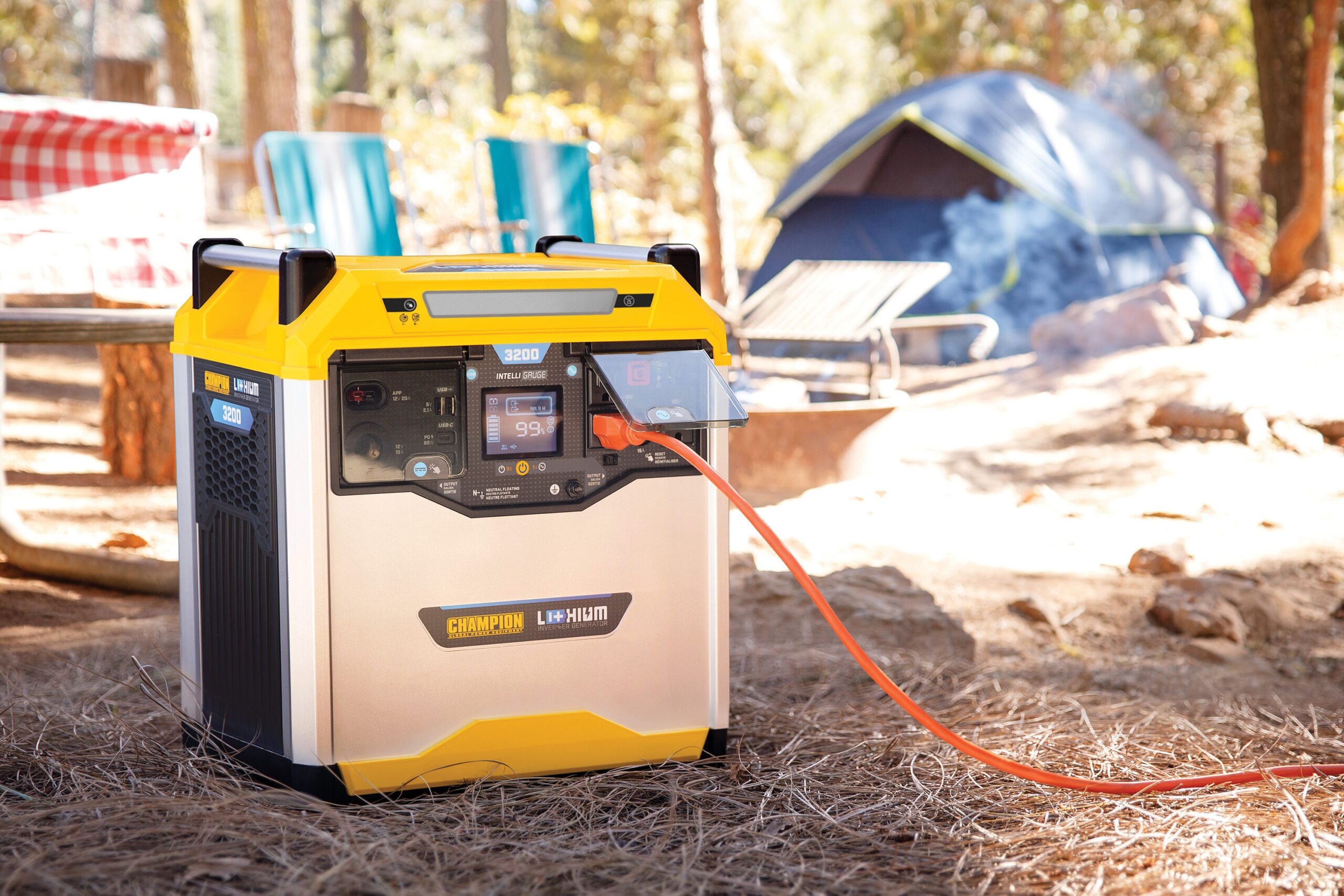
Champion’s lithium-ion power stations (285–3,276 Wh capacity) offer silent, fume-free charging for devices, lights, and small appliances. Since they don’t use an engine, there are no emissions or noise, making them perfect for use inside tents or during early-morning quiet. Power your essentials and enjoy that first cup of coffee and a hot breakfast in peace. For even greater convenience off-grid, both models are compatible with solar panel charging, giving you a sustainable way to recharge using the power of the sun.

Designed with Your Safety in Mind

Champion inverters and generators come with CO Shield®. CO Shield technology monitors the accumulation of carbon monoxide (CO), a poisonous gas produced by engine exhaust when the generator is running. If CO Shield detects unsafe elevated levels of CO gas, it automatically shuts off the engine. CO Shield is not a substitute for an indoor carbon monoxide alarm or for safe operation. DO NOT allow engine exhaust fumes to enter a confined area through windows, doors, vents or other openings. Generators must ALWAYS be used outdoors, far away from occupied buildings with engine exhaust pointed away from people and buildings.

Parallel Kits: Power Increase

Parallel kits are a game-changer for camping and RVing, allowing you to connect two compatible Champion inverters (of equal or different size) for increased power without upgrading to a larger, heavier unit. Even better, you can pair an inverter with a power station for a more versatile and flexible setup. This is perfect when you need extra juice for running RV air conditioners, electric cooktops, or multiple appliances at once. Not sure which kit you need? Champion’s easy-to-use Parallel Kit Selector Tool helps you find the right match in seconds, so you can power up with confidence on your next adventure.

Customer Support

At Champion, we’ve got your back with 24/7 customer support, whether it’s day or night. Need help right away? Reach out via phone or live chat. Prefer to handle things on your own? Our Help Center is packed with step-by-step articles and easy-to-use self-service tools. And for visual learners, our YouTube channel offers a library of technical videos, including maintenance tips and troubleshooting guides to keep you powered up and confident.