⚠️ 🌀 Hurricane season is here! Be ready—find generators near you:

Store Locator

News & Updates

How to Stay Safe During a Hurricane: Preparation Safety Tips

May 31, 2026

How to Stay Safe During a Hurricane

The best way to stay safe during a hurricane is to prepare before storms develop, follow evacuation orders immediately, maintain emergency supplies, and use backup power safely during outages.

Monitoring forecasts from the National Oceanic and Atmospheric Administration (NOAA), which includes the National Weather Service (NWS) and National Hurricane Center (NHC), securing your home, and having a clear emergency plan can significantly reduce risks to your family and property.

Hurricanes can produce dangerous flooding, high winds, prolonged power outages, and severe storm damage. Whether the threat is a tropical storm, major hurricane, or another tropical cyclone known as a typhoon in other regions, early preparation is your strongest defense.

What Should You Do Before Hurricane Season?

Preparing before hurricane activity increases helps reduce stress, improve response times, and ensure access to critical supplies.

Each year, meteorological experts from the NWS and the NHC monitor tropical weather systems across the Atlantic basin, including the Atlantic Ocean and Caribbean Sea. These organizations issue hurricane forecasts, tropical storm advisories, and emergency alerts to help communities prepare for dangerous weather conditions year-round.

Preparing early helps homeowners avoid fuel shortages, long supply lines, and limited emergency resources once named storms begin approaching land.

2026 Hurricane Season Outlook

According to forecasts from the NOAA and Colorado State University (CSU), the 2026 Atlantic hurricane season is expected to produce up to 14 named storms across the Atlantic Ocean and Caribbean – a below-normal forecast compared to recent active seasons.

Seasonal hurricane activity can vary depending on factors such as tropical Atlantic conditions, ocean temperatures, wind shear, and broader weather patterns like El Niño or La Niña.

This seasonal outlook is updated annually and should not replace official local emergency guidance.

What Should Be Included in a Hurricane Emergency Kit?

The NWS recommends assembling emergency supplies well before hurricane activity increases as part of your hurricane preparedness plan. Waiting until a storm has been named can make it difficult to find fuel, food, batteries, and other critical supplies.

Essential Hurricane Emergency Supplies

  • Water: Store one gallon per person per day for drinking and sanitation.
  • Food: Prioritize high-calorie, non-perishable foods that require little or no preparation.
  • Communication: Include a battery-powered or hand-crank NOAA Weather Radio.
  • Medical Supplies: Maintain a complete first aid kit and at least a 14-day supply of prescription medications.
  • Documentation: Store copies of insurance policies, identification cards, and birth certificates in waterproof containers.
  • Backup Power: Keep portable generators or home standby generators available to maintain essential systems during power outages.

How Do You Use a Generator Safely During a Hurricane?

Power outages after major hurricanes can last for days or even weeks depending on storm severity, infrastructure damage, and widespread wind damage. Backup power can help maintain refrigeration, communication devices, medical equipment, lighting, and other essentials during extended outages.

If you are using a portable generator, following proper generator safety procedures is critical to help prevent carbon monoxide poisoning, electrocution, and fire hazards.

Critical Generator Safety Rules

  • NEVER operate a generator inside a home, garage, basement, or crawlspace.
  • POSITION the generator at least 20 feet away from windows, doors, and vents.
  • INSTALL battery-operated carbon monoxide alarms on every level of your home.
  • DRY the generator and your hands before operation to reduce electrocution risks.
  • USE a Champion Storm Shield to help protect the generator during severe weather operation.

Regardless of the energy source, generators must always operate outdoors in well-ventilated areas. Learn more about generator safety at Take Your Generator Outside.

Should You Evacuate or Shelter During a Hurricane?

If local officials issue a mandatory evacuation order, leave immediately. Emergency managers use storm surge models, hurricane forecasts, and tropical weather data to determine when conditions may become life-threatening.

Even Tropical storms and Category 1 hurricanes can intensify rapidly before landfall, bringing dangerous flooding, high winds, and significant storm damage to coastal and inland communities.

If Evacuating

  1. Unplug appliances to reduce potential damage from power surges.
  2. Shut off the main water valve and gas pilot lights if instructed by local officials.
  3. Follow designated evacuation routes and avoid flooded roadways.

If Sheltering in Place

  1. Identify a safe room located on the lowest interior floor away from windows.
  2. Stay away from glass doors and windows even if they are boarded.
  3. Monitor the eye of the storm carefully and avoid going outside during temporary periods of calm.

How Can You Protect Your Home Before and After a Hurricane?

Protecting your home before a hurricane arrives can help reduce structural damage, storm damage, and overall safety risks.

Before the Storm

  • Install impact-resistant shutters or 5/8-inch exterior-grade plywood.
  • Clear gutters and downspouts to help prevent flooding.
  • Secure or move outdoor furniture, grills, decorations, and trash cans indoors.
  • Trim dead or overhanging tree branches that could become airborne during high wind speeds.

These preventative steps can help homeowners reduce the risk of costly wind damage during severe tropical weather.

After the Storm

Floodwaters often contain sewage, chemicals, debris, and hidden electrical hazards. Avoid walking or driving through standing water whenever possible.

Continue monitoring emergency broadcasts and local weather alerts after the storm passes, as flooding, storm damage, downed power lines, and unsafe conditions may continue long after landfall.

Hurricane Safety FAQ

What size generator do I need to power my home during a hurricane?

The right generator size depends on how many appliances and systems you want to power during an outage. Most homes need a generator between 5,000 and 12,500 watts to keep essentials like refrigerators, lights, fans, and select appliances running. Larger homes or those wanting to power central air conditioning may require even more capacity. To choose the right size, add up the running watts of the items you plan to use and account for any higher starting watts needed by appliances like refrigerators or AC units.

How far should a generator be from the house?

Portable generators should always operate outdoors at least 20 feet away from windows, doors, garages, crawlspaces, and vents to help reduce the risk of carbon monoxide poisoning.

Is it safe to run a generator in the rain?

Generators should not operate in standing water or while wet. If you need to run a generator during light rain or wet conditions, use a properly designed cover like the Champion Storm Shield, which protects the unit while maintaining required ventilation. Never operate a generator in heavy rain, flooding, or severe storm conditions.

Can I refuel a generator while it’s running?

Always turn the generator off, allow it to cool, and make sure it is in a well-ventilated area before refueling. Adding fuel while the generator is running can cause flammable gas or fuel vapors to come into contact with a hot engine or spark, creating a serious risk of fire or explosion.

What should you do during the eye of a hurricane?

Do not go outside during the eye of the storm. Conditions may temporarily become calm, but dangerous winds quickly return as the eye passes through.

When should you evacuate during a hurricane?

Evacuate immediately if local officials issue a mandatory evacuation order or if you live in a storm surge or flood-prone area.

How long do hurricane power outages last?

Hurricane-related power outages may last from several hours to multiple weeks depending on storm severity, flooding, wind damage, utility damage, and local infrastructure conditions.

Emergency Customer Support and Resources

During hurricane season, rely on official government agencies and trusted emergency organizations for real-time weather alerts, evacuation notices, and disaster assistance.

  • FEMA — Download the FEMA App for shelter locations and emergency alerts.
  • NHC — Access hurricane tracking maps, advisories, and storm updates.
  • Red Cross — Contact 1-800-RED-CROSS for disaster assistance and reunification services.
  • Local 211 Services — Dial 211 for information about shelters, food banks, and local emergency resources.

Champion Generators Built for Storm Season

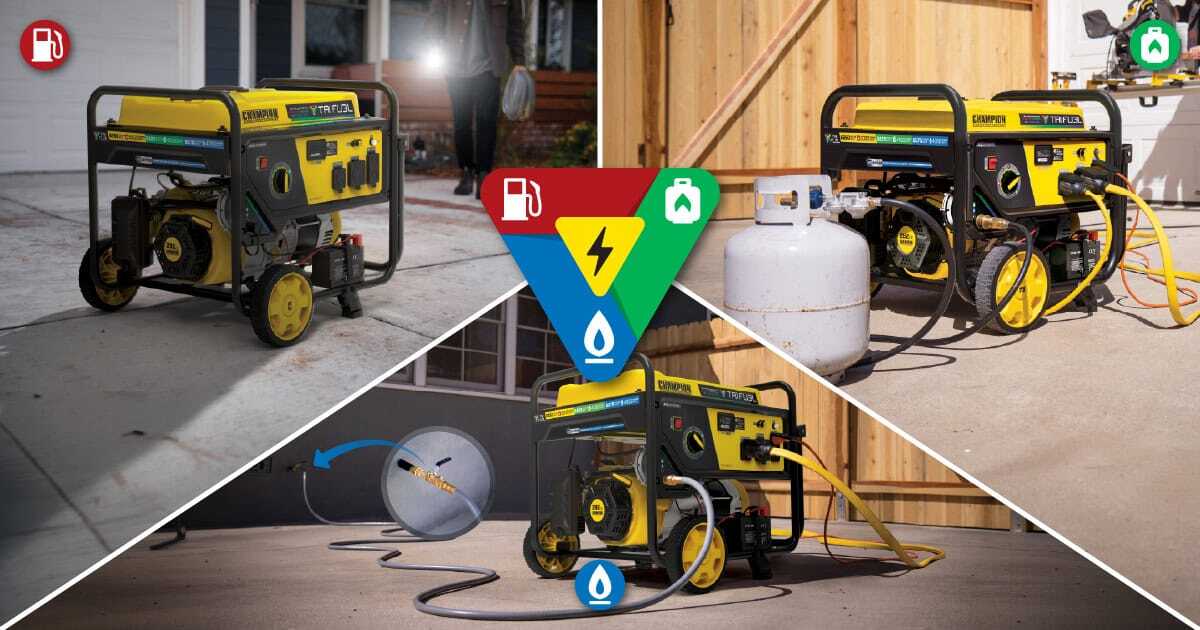
Champion Power Equipment offers a full lineup of portable generators and home standby generators designed to keep essential systems running during hurricane-related power outages. Dual Fuel models operate on either gasoline or propane, providing flexibility when fuel supplies become limited. Tri Fuel models add natural gas compatibility, allowing homes with utility service to maintain continuous backup power without refueling.

Many Champion portable generators are equipped with CO Shield technology, which automatically shuts the unit off if it detects unsafe levels of carbon monoxide in nearby enclosed spaces. CO Shield provides an added layer of protection against one of the most common and dangerous hazards associated with portable generator use during storms.

For severe weather operation, the Champion Storm Shield is a heavy-duty generator cover engineered specifically to protect portable generators from rain, sleet, and falling debris while the unit is running. Unlike standard tarps or improvised covers, Storm Shield is designed to maintain the airflow and ventilation a generator requires for safe operation, helping reduce the risk of overheating, water damage, and electrical hazards during prolonged outages. Storm Shield is compatible with select Champion generator models and is a recommended accessory for any homeowner relying on a portable generator during hurricane season.

Every Champion generator includes free lifetime technical support by phone, email, or live chat, in addition to the product warranty. Visit the Help Center for how-to guides and self-service resources, explore our YouTube channel for tutorials and troubleshooting videos, or contact our support team anytime for assistance in getting the most from your generator.

Fuel Face-Off: Gasoline, Propane, and Natural Gas Compared

May 26, 2026

Gasoline, propane, and natural gas each power portable generators with distinct advantages, and Dual or Tri Fuel models let you switch based on availability, cost, and conditions.

Choosing the right fuel for your portable generator affects everything from runtime and power output to storage, emissions, and how easily you can refuel during an outage. This guide breaks down how gasoline, propane, and natural gas each perform, where each fuel makes the most sense, and why Dual Fuel and Tri Fuel generators give you the flexibility to switch when conditions change.

Fuel Comparison

Understanding Generator Fuel Sources

When choosing a portable generator, one of the most important decisions involves selecting the right fuel source. Gasoline, propane, and natural gas are fossil fuels that each power generators effectively, but they differ in portability, fuel costs, storage requirements, environmental impact, and performance in different weather conditions.

For many homeowners, contractors, and outdoor enthusiasts, fuel flexibility is a major advantage. Dual Fuel and Tri Fuel generators allow users to switch between fuels depending on availability, making them especially useful during storms or power outages when fuel supplies may be limited.

Understanding how each energy source performs helps determine the best option for backup power, job sites, camping, or emergency preparedness.

Gasoline Generators: High Power and Easy Refills

Gasoline is the most widely used energy source for portable generators. Its availability at virtually every gas station makes refills quick and convenient, especially during short-term power outages or job site use.

Because gasoline contains a higher energy density, generators typically produce their maximum power output when running on gasoline. This makes gasoline an ideal option for applications where high starting wattage is required, such as running power tools, sump pumps, refrigerators, home heating, and other household appliances.

However, gasoline does have drawbacks. It has a relatively short shelf life and can begin degrading after several months if not stabilized. During large storms or emergencies, fuel shortages can also occur as people rush to fill containers.

Gasoline generators also produce exhaust emissions that contribute to their environmental impact.

Propane Generators: Cleaner-Burning and Reliable Storage

Propane has become an increasingly popular fuel source for portable generators thanks to its cleaner-burning properties and long-term storage benefits.

Unlike gasoline, propane does not degrade over time. Propane tanks and larger storage tanks can be stored for extended periods without affecting fuel quality, making them ideal for emergency preparedness. For homeowners who want backup power ready at any time, propane offers dependable cost-effectiveness and reliability.

Propane eliminates carburetor-related issues associated with gasoline, such as fuel degradation and clogging during storage. In addition, propane burns cleaner than gasoline, producing fewer emissions and reducing its environmental impact. This makes propane a lower-emissions energy source compared to many traditional fuels.

The main trade-off is slightly reduced power output. Generators running on propane typically produce a small reduction in wattage compared to gasoline because propane contains less energy per unit of volume.

Still, propane remains a versatile fuel that works well for camping, RVing, backup power, and remote job sites where portability and fuel storage safety matter.

Natural Gas Generators: Continuous Fuel Supply

Natural gas is another energy source available for certain generators, particularly Tri Fuel models designed to operate on gasoline, propane, or natural gas.

One of the biggest advantages of natural gas is its continuous gas supply. When connected to a residential gas line, a generator can run without requiring fuel refills, making it an attractive option for extended outages.

Natural gas offers a low-maintenance alternative to gasoline because it is supplied directly from a utility line, eliminating concerns about stale fuel and many carburetor issues caused by gasoline sitting unused for extended periods. It also burns more cleanly than gasoline, producing fewer emissions and lowering its overall environmental impact. For homeowners with access to a natural gas connection, this makes it a convenient and more eco-conscious fuel option for backup power.

However, natural gas generators require access to a home or commercial gas supply line, which limits their portability compared to gasoline or propane generators. In addition, power output is usually slightly lower than gasoline or propane when running on natural gas because it contains less energy per BTU/cubic foot.

For homeowners who already have natural gas service, a Tri Fuel generator connected to the home’s gas line can provide a convenient and reliable backup power solution.

Which Produces More Power?

When comparing generator fuels, gasoline typically delivers the highest power output. Most generators are rated for their maximum wattage using gasoline because it provides greater energy density.

Propane generators generally produce slightly less power, often around 5–10% lower output depending on the engine and generator design. Natural gas typically results in an even larger reduction in wattage.

While gasoline may provide maximum performance, propane and natural gas offer advantages in clean-burning operation, storage stability, and reduced environmental impact. For many users, the ability to switch* between fuels offers the best balance of performance and flexibility.

*The generator must always be turned off and allowed to cool before switching between fuel sources.

How Much Fuel Does a Portable Generator Use Per Hour?

Fuel consumption depends on the generator size, load level, and fuel source. A typical mid-size portable generator running at half load might use approximately:

  • 0.6–0.75 gallons of gasoline per hour
  • 1–1.2 gallons of propane per hour
  • Natural gas consumption varies depending on gas pressure and generator design

Please note that standard portable generators and inverter generators have their fuel consumption rated at different loads. Standard portable generators are rated at 50% load, whereas inverters are measured at 25% load.

Actual usage varies based on engine efficiency, electrical load, and operating conditions. Generators operating under heavier loads will consume more fuel.

Fuel consumption also affects fuel costs and overall cost-effectiveness over time. In some regions, propane or natural gas may offer lower operating costs depending on local fuel prices and gas supply availability.

Is Gasoline, Propane, or Natural Gas Better for Cold Weather?

Cold temperatures can influence generator performance, especially when storing and handling fuel.

Gasoline performs reliably in cold weather, though it can degrade during long storage periods. Propane stores indefinitely but may experience reduced pressure in extremely low temperatures. Natural gas is also a dependable option in winter, providing a continuous fuel supply through your home’s utility line and eliminating the need to refuel or store fuel on-site. However, because it depends on an active gas utility connection, it may not be available in areas without natural gas service or during rare utility disruptions.

For most winter climates, gasoline, propane, and natural gas all perform well when generators are properly maintained and protected from harsh weather conditions. Proper fuel storage, maintenance, and safe operation practices help maintain reliable generator performance.

Regardless of the energy source, generators must always operate outdoors in well-ventilated areas to prevent carbon monoxide exposure.

Choosing the Right Generator Fuel

The best fuel for a portable generator depends on how and where it will be used. The best fuel type depends on usage:

  • Gasoline: highest power output, easy on-site refills, but highly flammable.
  • Propane: cleaner-burning, long storage, ideal for off-grid backup and emergency preparedness.
  • Natural Gas: continuous supply for homes with gas service, convenient, and eco-friendly.

For many users, Dual Fuel or Tri Fuel generators offer the best combination of flexibility, energy efficiency, cost-effectiveness, and reduced environmental impact. The ability to switch fuels helps ensure power remains available even when one fuel source becomes difficult to obtain. By understanding the differences between gasoline, propane, and natural gas, generator owners can choose the energy source that best fits their needs for backup power, outdoor activities, or job site electricity.

From Fuel Choice to Reliable Power

Champion Power Equipment offers a full lineup of portable generators designed to meet a wide range of power needs. Dual Fuel models operate on either gasoline or propane, giving you added flexibility during power outages or fuel shortages. Tri Fuel models also run on natural gas, making them an excellent option for homes with utility service by providing continuous backup power without the need to refuel. Whether you need portable power for a job site, reliable backup for your home, or the convenience of multiple fuel options, there’s a Champion generator built for the task.

Every Champion generator includes free lifetime technical support by phone, email, or live chat, in addition to the product warranty. Visit the Help Center for how-to guides and self-service resources, explore our YouTube channel for tutorials and troubleshooting videos, or contact our support team anytime for assistance in getting the most from your generator.

What Size Generator Do I Need?

April 24, 2026

Most homes typically require a 5000–12,500-watt generator to keep essential appliances running during an outage.

Wondering, “what size generator do I need?” Selecting the appropriate generator size is key to keeping your essentials running smoothly, whether you’re facing a home power outage, powering tools at a job site, or enjoying the great outdoors.

With so many options available, determining what size generator to run a house can feel overwhelming. This guide is here to assist you in understanding what size generator you need for your house, exploring different generator types, and utilizing sizing tools to make a solid choice.

Types of Generators

When figuring out “what size generator do I need” for my house, it helps to know the different types. Portable generators are convenient for everything from camping trips to home backup during outages. They’re generally smaller and easy to move, making them a preferred choice for temporary power needs. In contrast, home standby generators are installed permanently and activate automatically during outages, providing whole-house backup.

  • Portable Generators:
    • Standard units that provide electrical power for devices, tools, appliances, or recreation. Available in ranges from 1000–22,000+ watts, they are economical, durable, powerful, and portable.
  • Inverter Generators:
    • Quieter and lighter than standard portable generators, inverters produce clean, stable power ideal for sensitive electronics like phones and laptops. Larger inverter generators can also support electric vehicle charging. Typically ranging from 1000–11,000+ watts, they use intelligent microprocessors to adjust engine speed based on load — improving fuel efficiency and extending engine life.
  • Home Standby Generators: permanent whole house generators ranging from 8500–26,000+ watts that automatically restore power within seconds of an outage being detected. Professional installation required.

⚠️ Safety Note — Home Backup Use

When using a portable generator for home backup power, it must be connected to a manual transfer switch installed by a licensed electrician. This ensures safe operation and proper distribution of power to your selected circuits.

Fuel Types

Your generator’s fuel type also influences its size and capacity. They can operate on gasoline, propane, or natural gas.

Gasoline

  • Fuel readily available around the world
  • No additional fuel tank is needed for run time
  • Provides highest power output

Propane

  • Costs less than gasoline
  • Clean burning fuel with a longer shelf life
  • No fuel degradation during storage
  • Note: propane typically delivers approximately 10% less wattage output than gasoline — factor this in when sizing

Natural Gas

  • Lowest cost of the three options
  • No refills needed — connects directly to your home’s utility line
  • Note: natural gas typically delivers approximately 10–15% less wattage output than gasoline — factor this in when sizing

Calculating Your Power Needs

To determine the right size for your power needs, start with the wattage requirements of your key appliances. Each appliance usually has a wattage label or it’s listed in the manual. Create a list of everything you want to power during an outage, from the fridge to your most critical appliances, and note their wattage needs. You can use our Wattage Reference Chart to help guide you on determining wattage of a tool or appliance.

What is Wattage?

Wattage refers to the amount of electrical power needed to run a device, tool, or appliance.

How to Calculate Wattage

Determining the wattage needed by a device, tool, or appliance is usually straightforward, but not always. While many products list wattage directly on their label, others may only provide volts and amps. In those cases, you’ll need a quick calculation to find the wattage.

Use the following formula when wattage isn’t listed:

  • Volts (V) × Amps (A) = Watts (W)

Starting vs. Running Watts

Many appliances — like refrigerators and hair dryers — require both a starting wattage and a running wattage to operate properly. Simpler devices like light bulbs and laptops require only a running wattage. So keep in mind the difference between starting and running watts.

Starting watts: the additional burst of power certain devices require to start up. Starting watts are typically 1–2 times the running wattage and only last a fraction of a second.

Running watts: the continuous power a device needs to keep operating once it’s up and running. This is the number you’ll use for most of your calculations.

Determining Your Total Wattage Needs

Now that you understand how wattage works, follow these steps to estimate the generator size you’ll need:

  1. List all the appliances and devices you plan to power with a generator.
  2. Find the running watts for each item (use the label or calculate it if only volts and amps are listed).
  3. Add together all running watts to get your base power requirement.
  4. Identify the highest starting wattage among your appliances.
  5. Add that starting wattage to your total running watts to determine your peak power need.

This final number gives you a clear picture of the generator size required to keep everything running smoothly. With a wide range of options available, Champion Power Equipment makes it easy to find a generator that fits your specific home use power needs.

Wattage Reference Table

The appliances below represent the most common items people want to power. For a complete list of appliances, tools, and outdoor equipment, see our Generator Wattage Chart.

Appliance Running Watts Starting Watts
Home & Backup Power
Refrigerator 150–400W 800–1200W
Freezer 100–500W 500–1000W
Window AC (10,000 BTU) 900–1200W 1800–2400W
Central AC (3 ton) 3000–3500W 5000–6000W
Furnace fan (1/2 HP) 300–800W 800–1600W
Sump pump (1/2 HP) 800–1050W 1300–2150W
Microwave 600–1200W —*
Space heater 750–1500W —*
TV 80–400W —*
LED lights (per bulb) 8–15W —*
Phone/laptop charger 20–100W —*
Job Site
Circular saw (7-1/4″) 1200–1800W 2400–3600W
Air compressor (2 HP) 2500W 7500W
Outdoors & Recreation
RV air conditioner (13,500 BTU) 1500–2000W 2800–3500W
RV refrigerator 150–600W 400–1000W

— These appliances do not require extra starting watts. Size based on running watts only.

Understanding Generator Sizes

Generators come in various sizes for different tasks — here’s how to match your wattage needs to the right tier.

Wattage Typical Appliances Best For
1000–3000W Lights, phone chargers, small appliances Camping, tailgating, short outages
3000–7000W Refrigerator, freezer, window AC, TV Home essentials during outages
7000–12,500W Central AC units, electric water heater, well pump, sump pump Larger homes, job sites, extended outages
12,500–22,000W Whole-home coverage, multiple large appliances simultaneously like compressors and air conditioning Whole-home portable backup, large job sites

Recognizing these distinctions helps you determine what size works best for your power demands.

Need automatic whole-home generator backup? Home standby generators offer a permanent, automatic power system ranging from 8500–26,000 watts. Unlike portable generators, they activate within seconds of an outage — no setup required. What Size Generator Do I Need?

Frequently Asked Questions

What size generator do I need for a 2000 sq ft house? Most 2000 sq ft homes need a 5000–7500 watt generator to cover essentials like the refrigerator, lights, outlets, and a window AC unit. If you want to run central air conditioning, plan for 10,000 watts or more.

Will a 3500 watt generator run a refrigerator? Yes — a modern refrigerator typically runs at 150–400 watts and starts at around 800–1200 watts, well within a 3500W generator’s capacity. You’ll have remaining wattage for lights and small devices.

What’s the difference between starting watts and running watts? Running watts is the continuous power a device needs to operate. Starting watts is the brief power surge required to start appliances with motors — like refrigerators and air conditioners. Always size your generator to handle the highest starting wattage among your appliances, added to your total running wattage.

Do I need a transfer switch for a portable generator? Yes, if you’re connecting a portable generator to your home’s electrical system. A manual transfer switch, installed by a licensed electrician, safely routes generator power to your chosen circuits and prevents back-feeding electricity into utility lines — which can be dangerous for utility workers.

Does running on propane or natural gas affect my generator’s output? Yes. Generators running on propane typically produce about 10% less wattage than on gasoline. Natural gas can reduce output by 10–15%. If you plan to use an alternate fuel, factor this reduction into your sizing calculation.

What is the difference between a portable generator and a home standby generator? Portable generators are manually operated, require setup, and run on gasoline or alternate fuels. Home standby generators are permanently installed, activate automatically within seconds of an outage, and connect directly to your home’s electrical system and fuel supply. Standby generators require professional installation.

Using a Generator Sizing Tool

You’ve calculated your wattage needs — now use our Portable Generator Selector Tool to find the right generator in minutes. Simply make a few selections and you’ll receive tailored recommendations based on your specific power requirements.

After receiving your results, take a moment to review them. Consider the suggested sizes and think about potential future needs or additional devices you might want to add later. It’s wise to choose a generator that exceeds your calculated wattage by a safe margin for any unexpected surges. With these tips, you can confidently decide what size generator to run a house, ensuring reliable performance, a sound investment, and peace of mind.

Customer Support

Still unsure how much power you need in a backup generator? Our team is here to help you find the generator that fits your specific needs. Reach support by phone or live chat, or visit the Help Center for easy-to-follow guides and self-service tools. You can also check out our YouTube channel for tutorials and troubleshooting videos to help keep your equipment running smoothly.

Can I Run a Generator in the Rain?

March 19, 2026

When wet weather hits and power outages follow, it’s natural to ask: Can I run a generator in the rain? The short answer? No, at least not without proper protection.

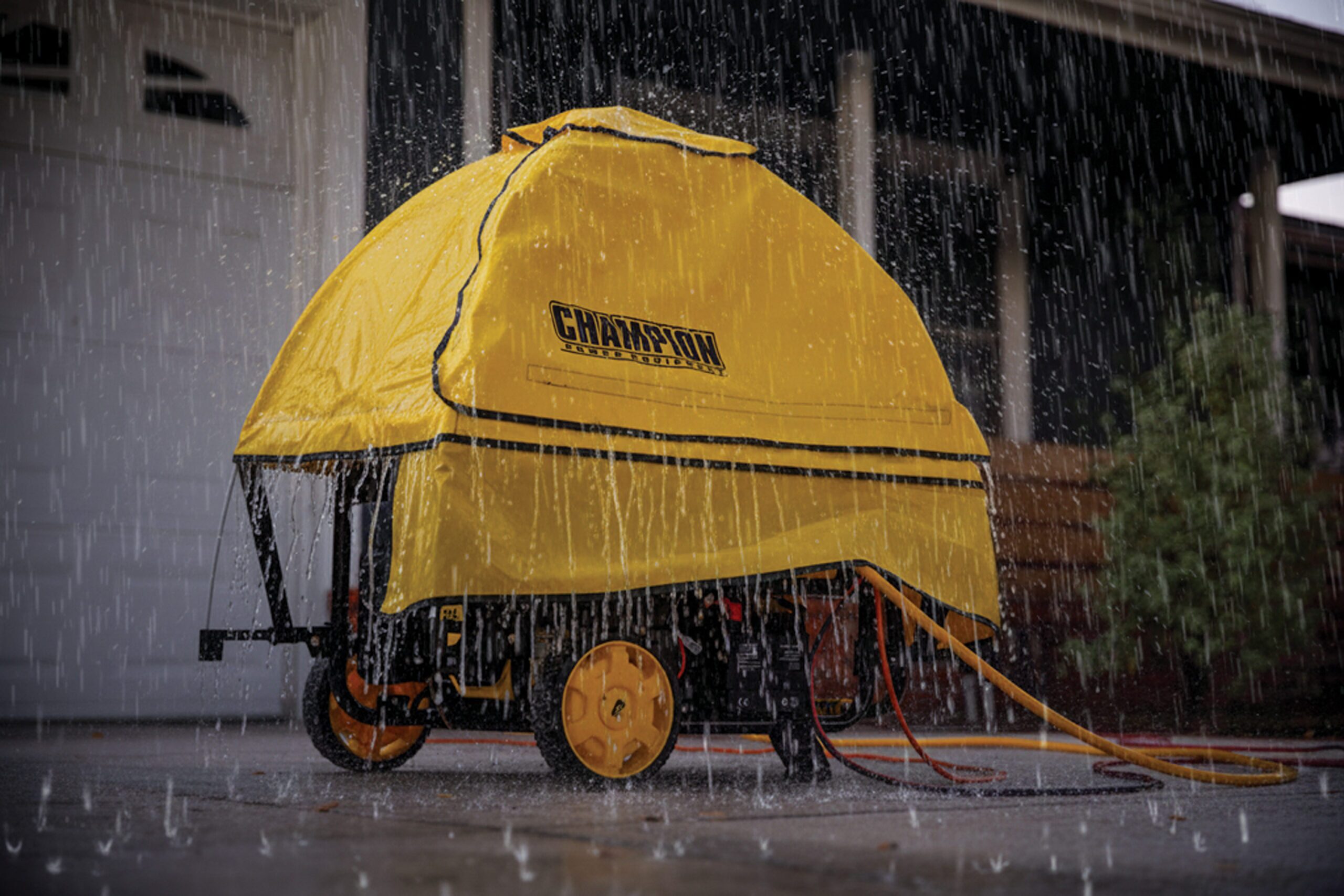
Running a generator during bad weather or a heavy downpour without protection creates serious safety risks. But with the right solution, like a Champion Storm Shield by GenTent, you can safely operate your generator in wet conditions while maintaining proper airflow and protection.

Let’s break it down.

100376 lifestyle

Why You Shouldn’t Run a Generator in the Rain (Without Protection)

First things first: never operate a portable generator inside an enclosed space. You must always run a generator outdoors, far from doors, windows, or vents. Why? Because generators produce carbon monoxide (CO), a colorless, odorless gas that can be deadly within minutes.

Now, what about rain?

Most portable generators and inverter units are not weatherproof. Operating a portable generator or inverter in wet conditions exposes you to serious risks:

  • Electrical shocks
  • Short circuits
  • Increased risk of electrocution
  • Rust and corrosion inside the engine
  • Moisture contamination of fuel
  • Performance issues during a rainy day

Water and electricity do not mix. If your goal is proper generator safety, keeping your equipment dry is non-negotiable. So again: can you run a generator in the rain? Not safely, unless it’s properly protected.

The Solution: Champion Storm Shields by GenTent

This is where the Champion Storm Shield by GenTent changes the conversation. A Storm Shield is not just a basic generator cover. It’s a weather-resistant running cover designed specifically to:

  • Keep your generator dry and protected — open frame models handle up to 12 inches of rain per hour, 18 inches of snow per day, and 70 mph winds, while inverter models handle up to 18 inches of rain per hour, 20 inches of snow per day, and 110 mph winds
  • Allow safe operation during wet weather
  • Provide proper ventilation to prevent overheating
  • Reduce exposure that can lead to short circuits or electrical shocks

Unlike a tarp or makeshift shelter (which can trap heat and create fire hazards), the Storm Shield is engineered to maintain airflow while shielding sensitive electrical components. So the better answer to the question becomes: Can I run a generator in the rain? With a Champion Storm Shield, the answer finally becomes yes.

Safe Setup in Wet Conditions

Even with a Storm Shield, proper setup still matters. Follow these essential safety tips:

  • Always place your generator on a level surface
  • Keep it elevated away from puddles
  • Use only weather-resistant extension cords rated for outdoor use
  • Inspect cords for damage to prevent electrocution
  • Maintain clear airflow to avoid overheating

The Storm Shield protects from above, but you still need to ensure your setup prevents water pooling underneath.

Protecting Your Generator Long-Term

Rain doesn’t just create immediate electrical risks, it can shorten the life of your equipment. To protect your generator investment:

  • Use a Storm Shield during operation in wet conditions
  • Wipe down the unit after exposure to moisture
  • Check electrical outlets and components for water intrusion
  • Store your generator in a dry location when not in use

Regular maintenance helps prevent corrosion and keeps your generator ready for the next round of bad weather or unexpected power outages.

Final Answer: Can I Run a Generator in the Rain?

Without proper protection? No.

With a properly installed Champion Storm Shield by GenTent, set on a level surface and following essential generator safety practices, can you safely run your generator in the rain? Yes — stay powered through even the heaviest downpour.

When storms hit, the right protection determines whether you have power or not.

In an emergency, your portable generator only makes a difference when you run it right.

Customer Support

Champion offers a variety of support options designed to meet your needs. Customers can connect with our team by phone or live chat, or explore our Help Center for step-by-step guides and convenient self-service resources. For additional assistance, our YouTube channel features helpful tutorials and troubleshooting videos to keep your equipment operating at its best.

How to Store a Generator when Not in Use

February 19, 2026

Wondering “how do I store a generator when not in use?” It’s an essential task that keeps your machine in optimal shape for when you need it most. Whether you rely on your generator during power outages or for camping trips, knowing how to store a portable or inverter generator properly ensures it’s always ready to go. In this guide, we’ll walk you through the steps of preparing and storing a generator, including vital small engine cleaning and proper maintenance tasks, for long-term storage. We’ll also discuss how to protect your generator from environmental factors, keeping it ready for action whenever the need arises.

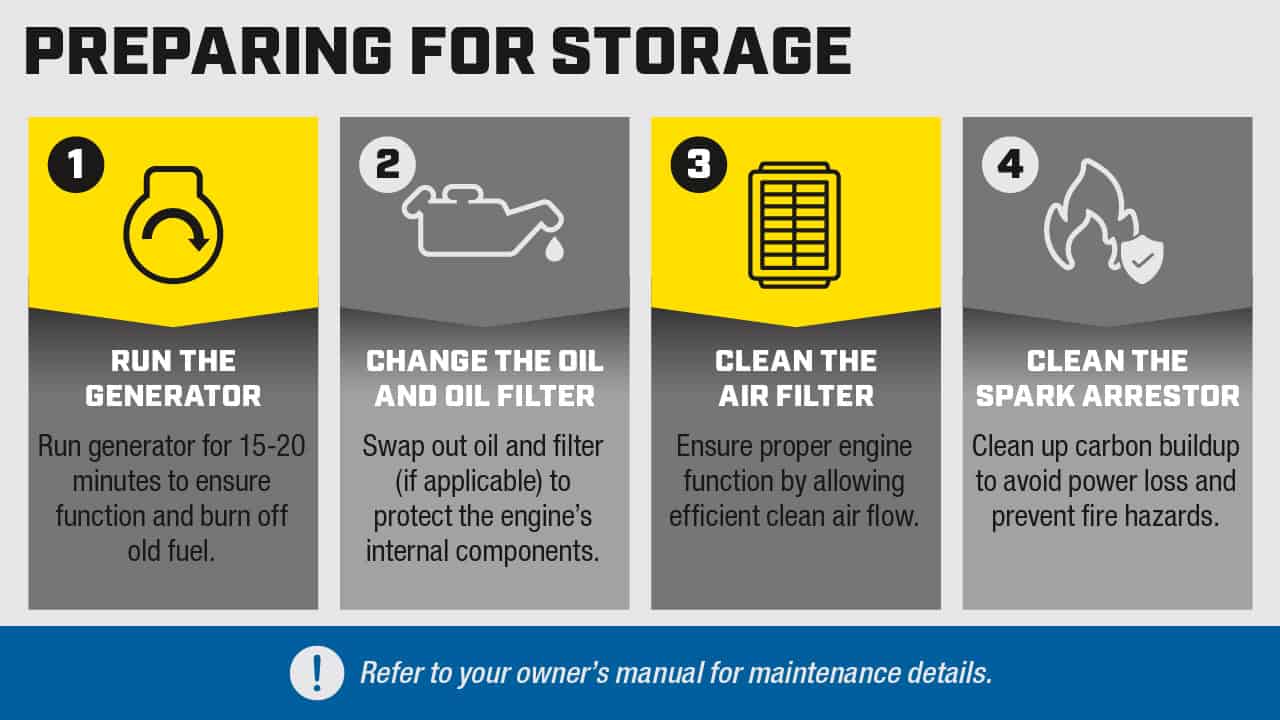
Preparing Your Generator for Storage

Before storing a generator for a while, you’ll want to ensure it’s in prime condition for the next use.

Generator Storage Blog Infographics Storage Prep

  1. Start by running the generator for a short period (15-20 minutes) to make sure everything’s functioning correctly. This process also helps burn off any remaining fuel in the carburetor, which is key in preventing issues related to old gasoline.
  2. Change the oil and oil filter (12,000-watt units and above only). Old generator oil can contain particles that might cause engine wear if left unattended. By swapping out the oil, you help protect the engine’s internal components and maintain smooth operation.
  3. Clean the air filter. A clean air filter is vital for proper engine function, as it ensures the engine receives the right amount of clean air. If the filter’s clogged or dirty, it can restrict airflow, reducing efficiency and possibly harming the engine. So, take a few minutes to clean or replace it as needed.
  4. Clean your portable generator’s spark arrestor. If the arrestor contains too much carbon buildup, engine performance will hinder, can surge, or experience power loss. Keeping it clean also helps prevent fire hazards.

By following these steps, you’ll set yourself up for successful generator storage and reliable future use.

Pre-Storage Cleaning and Maintenance

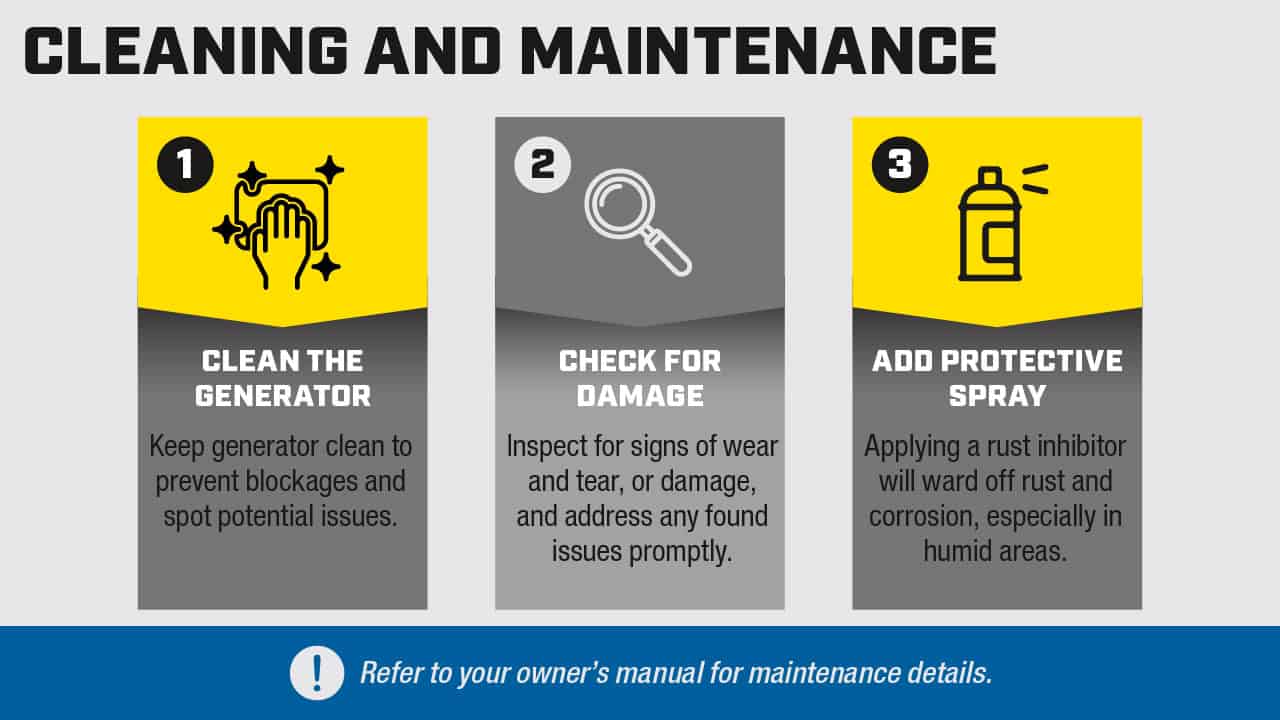
Cleaning and maintenance are crucial before you tuck your generator away for an extended period.

Generator Storage Blog Infographics Cleaning and Maintenance

  1. Wipe off any debris from the exterior using a soft cloth. Pay special attention to the air intake and exhaust areas to prevent blockages. A clean surface not only looks good but also helps you spot any potential issues that might need fixing.
  2. Check for signs of wear or damage as well. Inspect the generator’s casing, fuel lines, and electrical connections for any cracks or fraying. Addressing these issues before storage can save you from headaches down the road. If you spot significant damage, consult your generator’s owner’s manual for advice on repairs or replacements.
  3. Apply a protective spray to ward off rust and corrosion. A good rust inhibitor can be valuable, especially if your generator will be in a humid area. This little step goes a long way in maintaining your generator’s condition.

By taking care of these cleaning and maintenance tasks, you ensure your generator remains in great shape, ready for whatever comes next. For a full guide on generator maintenance*, check out our generator maintenance checklist.

*Always refer to your portable generator’s owner’s manual for model-specific maintenance information.

Safe Generator Storage Best Practices

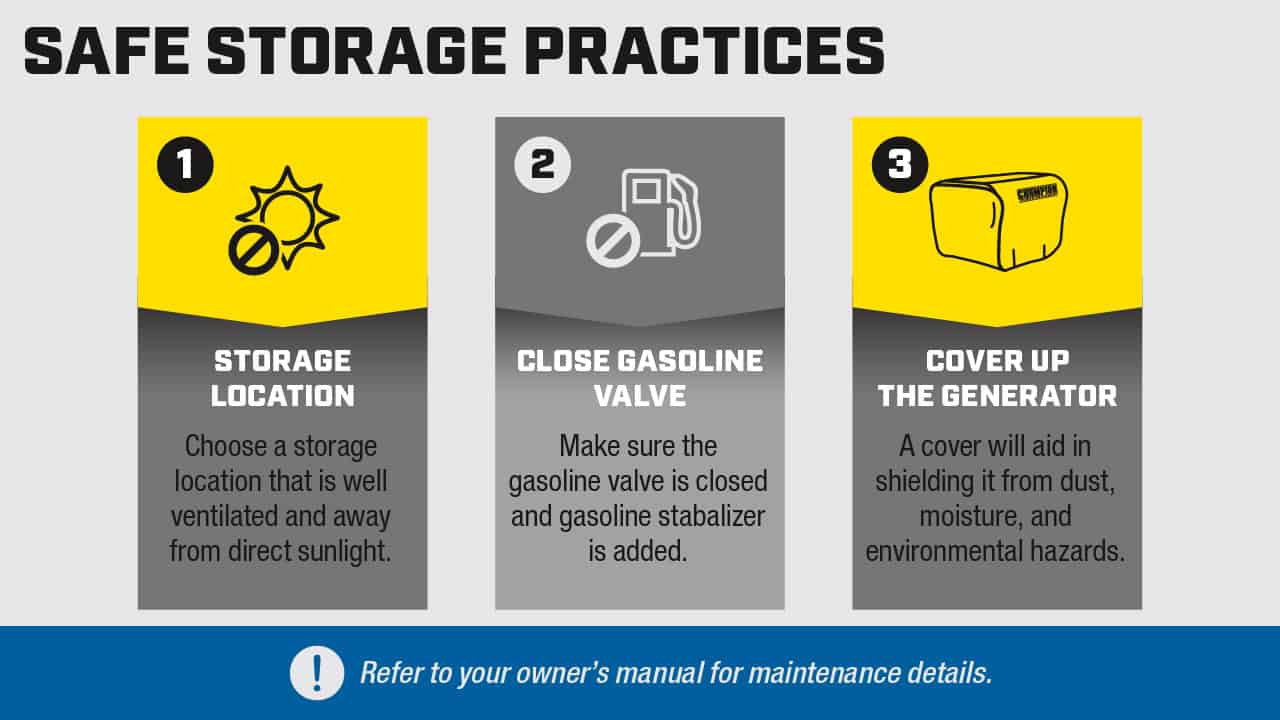
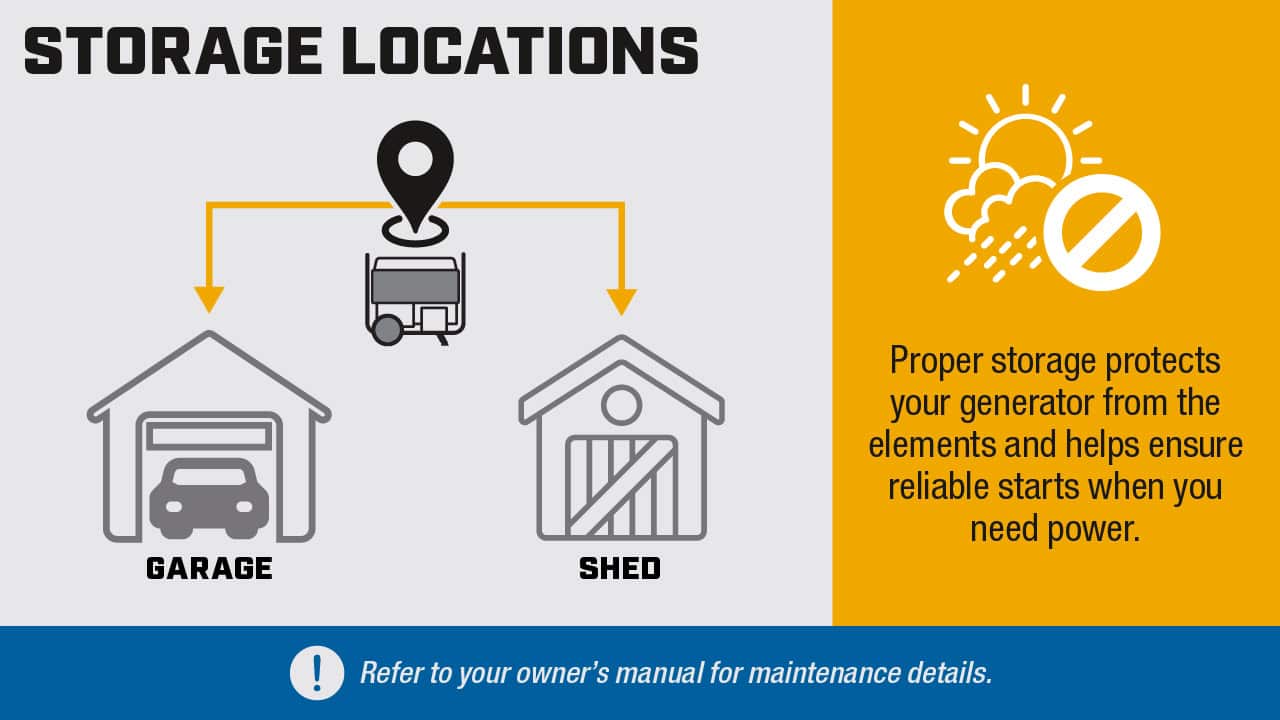
When it comes to generator storage, location is crucial. Choose a dry, cool spot away from direct sunlight, like a well-ventilated garage or shed. Avoiding excessive heat and humidity helps protect your generator’s components and fuel system.

Generator Storage Blog Infographics Storage Best Practices

Before storing your generator, make sure the gas valve is closed and use a generator gas fuel stabilizer. A generator gas stabilizer prevents gasoline from deteriorating, which could lead to hard starts or engine troubles later. Run the generator for a few minutes with the stabilizer so the whole system benefits. Let it cool completely before stowing it away.

Consider covering your generator to shield it from dust and moisture with a protective cover for portable generators or inverters. A quality cover keeps your generator safe from environmental hazards, helping to maintain its appearance and functionality.

Lastly, is it safe to store a generator in a garage? The answer is yes, as long as it’s well-ventilated and the generator is cool before storage. This ensures safe and effective generator storage for long periods.

Generator Storage Locations

Knowing where to store a generator when not in use is crucial for its longevity. A well-ventilated garage or a dedicated outdoor shed can be ideal locations, provided they are dry and shielded from direct sunlight. Proper generator storage not only keeps your equipment in working order but also ensures safety.

Generator Storage Blog Infographics Storage Locations

By storing a generator in a location that meets these conditions, you minimize the risk of damage from environmental factors. Always remember to use a generator gas stabilizer to maintain fuel quality, replace the spark plug, as it helps prevent fouling and corrosion, ensuring your generator starts reliably and runs efficiently when you need it again, and routinely check the condition of your generator to prevent long-term issues.

Customer Support

Champion provides multiple support options to fit your needs. Our team is available by phone or live chat, while our Help Center offers easy-to-follow guides and self-service resources for a DIY approach. Additional tutorials and troubleshooting videos can be found on our YouTube channel to help you keep your equipment running smoothly.

Generator Safety: Essential Do’s and Don’ts

January 15, 2026

Portable and standby generators provide reliable backup power, but understanding generator safety is crucial to protect people, property, and equipment. Use this guide to learn about key hazards, such as carbon monoxide risks, and how to use a generator safely. Whether you’re a seasoned portable generator user or are considering purchasing your first unit, we’ll provide portable generator safety tips that apply to many setups.

100376 lifestyle

Understanding Generator Safety

Improper generator use can lead to carbon monoxide (CO) poisoning, electric shock, fire from fuel or hot surfaces, and mechanical injury. Many incidents occur during outages when equipment is quickly set up without proper ventilation or electrical safeguards. Focusing on generator safety precautions from the start helps you avoid these pitfalls.

Following the manual, using approved accessories like Storm Shields for wet weather, and planning your setup in advance dramatically reduces risk. Always operate a portable generator outdoors in an open area on a flat, level surface away from any windows or doors and install working CO alarms. Reports indicate that CO-related injuries and fatalities linked to portable generators during storms and cold snaps are often preventable with correct placement and ventilation. If evaluating generators for rent, ensure you understand the unit’s fuel type, output, and safety features before use.

Carbon Monoxide Awareness

Carbon monoxide is a colorless, odorless gas created by fuel-burning engines. Even low levels can make you sick; higher concentrations can be fatal within minutes. Because CO is undetectable by smell or sight, rely on proper placement and functioning CO alarms. Champion’s CO Shield* technology provides added safety by automatically turning off the portable generator should it detect dangerous levels of CO. Note: CO Shield is not a substitute for an indoor carbon monoxide alarm or for safe operation.

Generator safety precautions are key to generator safety:

  • Symptoms: headache, dizziness, nausea, confusion, weakness, and chest pain. Severe exposure may cause loss of consciousness.
  • If exposure is suspected: move to fresh air immediately and call emergency services.
  • Prevention: run generators only outdoors, at least 20 feet from windows, doors, and vents, with the exhaust directed away from the building. Never operate in garages, basements, crawlspaces, or enclosed porches—even with doors open.
  • Install battery-powered or hardwired CO alarms on every level of your home and test them regularly.

Safe Operating Procedures

Do

  • Read the owner’s manual before use and follow all labels.
  • Use heavy-duty, outdoor-rated extension cords with intact grounding.
  • Keep the unit dry on a stable, level surface; use Storm Shields in wet weather.
  • Refuel only when the engine is off and cool; store fuel in approved containers.

Don’t

  • Do not run a generator indoors, in a garage, or under a carport.
  • Avoid backfeeding the home through a wall outlet.
  • Do not overload circuits or exceed rated wattage.
  • Do not operate near combustible materials or block airflow around the unit.

Correct placement and ventilation are essential. Position the generator outdoors with at least 20 feet of clearance from openings and aim the exhaust away from structures. In rain or snow, use a Storm Shield designed for generator operation that maintain airflow and keep the unit dry.

Regular maintenance supports safety and reliability. Follow oil change intervals, inspect and replace air filters as needed, check fuel lines for cracks, test GFCI outlets, and run the generator periodically for at least 15 minutes. Replace worn cords and verify all connections are tight and undamaged.

Emergency Preparedness

Plan ahead for outages. Identify where the generator will sit, how it will connect to essential loads, and how you will store and rotate fuel. Keep a kit with spare oil, filters, spark plugs, and approved fuel containers. Confirm CO alarms work and inspect extension cords before each use. These steps reinforce portable generator safety when it matters most.

To power household circuits safely, use a professionally installed manual transfer switch or interlock kit that isolates your electrical system from the utility grid. This prevents backfeeding a generator, protects utility workers, and ensures the generator supplies only selected circuits. Never attempt to power your home by plugging the generator into a receptacle.

During severe weather, secure the generator on a stable surface, use a Storm Shield in wet conditions, and monitor wind direction to keep exhaust moving away from the home. Manage noise considerations, keep a fire extinguisher nearby, and always shut down and cool the unit before refueling. Prioritize these portable generator safety tips over convenience whenever you operate a generator, whether it’s your own unit or one sourced from renting.

Customer Support

Champion’s support team is ready whenever you need a hand—whether that’s a quick phone call or live chat. If you prefer a DIY approach, our Help Center is filled with easy, step-by-step guides and self-service tools. You can also head to our YouTube channel for helpful tutorials and troubleshooting videos to keep your equipment running strong.

*CO Shield technology monitors the accumulation of carbon monoxide (CO), a poisonous gas produced by engine exhaust. If CO Shield detects unsafe, elevated CO, it automatically shuts off the engine. CO Shield is not a substitute for an indoor carbon monoxide alarm or for safe operation. Never allow engine exhaust to enter a confined area through windows, doors, vents or other openings. Generators must ALWAYS be used outdoors, far from occupied buildings with engine exhaust pointed away from people and buildings. Meets ANSI/PGMA G300 requirements.

Winter Preparedness Checklist

December 18, 2025

Winter is a season of snow, ice, and chilly winds, often arriving with little notice. To safeguard your home, family, and power needs, use this winter preparedness checklist. By planning ahead, keeping an eye on the weather, and having reliable equipment ready, you can face the season with confidence. Keep this snow storm preparation checklist handy to track tasks, gather supplies, and double-check everything before the weather takes a turn.

201223 lifestyle

Understanding Winter Storms

Winter storms vary in their impact and duration, making it crucial to understand their types to prepare adequately. Snowstorms can obscure visibility and complicate travel, while ice storms cover roads and power lines, increasing outage risks. Blizzards bring heavy snow and strong winds, causing whiteout conditions and severe wind chills.

Stay informed through official alerts. A Winter Storm Watch indicates possible severe conditions, while a Winter Storm Warning signifies that hazardous weather is imminent or occurring. A Blizzard Warning denotes dangerous visibility and wind conditions, and an Ice Storm Warning points to significant icing risks. A Wind Chill Warning alerts to life-threatening cold. These alerts help you decide when to shelter, travel, or activate backup power, and serve as a cue to start using your winter storm preparedness checklist.

Monitor forecasts frequently from reliable sources, and enable mobile notifications. This way, you’ll know when to fuel generators, charge devices, and secure outdoor items before the storm peaks. This preparation gives you the time to gather necessary supplies like salt, shovels, and safe fuel storage.

Preparing Your Home

Seal gaps around windows and doors using weatherstripping, door sweeps, and insulating film to keep warmth in and cold out. Draw curtains at night and open them during sunny periods to harness passive heat. If conditions allow, clear roofs and gutters to prevent ice dams and water damage.

Stock up on essentials before snow arrives. Aim for at least three days’ supply of nonperishable food, water, and hygiene items. Include no-cook foods and a manual can opener. Don’t forget pet food, medications, and baby supplies. Store rock salt for walkways and have a snow shovel ready. Add these to your winter storm preparation checklist to ensure your supplies are complete when needed.

Check your heating system’s readiness. Schedule a pre-season inspection, replace filters, and test thermostats. Use space heaters on stable surfaces with appropriate clearance, and never leave them unattended. Prepare for outages with a backup heating plan and position your portable generator outdoors, at least 20 feet from doors and windows, using a transfer switch or suitable power cords. Include generator fuel and cords in your preparation plan.

Creating an Emergency Kit

A well-prepared kit of winter storm supplies can save you time during a power outage. Include flashlights and headlamps with fresh batteries, a weather radio, first-aid supplies, blankets, warm clothing, and multi-tools. Add sanitation items, gloves, and traction aids like ice cleats. Keep important documents and contact lists sealed and accessible.

Reliable backup power is essential for winter resilience. A portable generator, inverter, or solar generator can run essentials like refrigerators, sump pumps, furnaces, and phone chargers. Consider fuel type, wattage, runtime, and safe fuel storage. For automatic backup, a home standby generator can maintain critical circuits without manual intervention.

Review and refresh your kit each season. Replace expired food, update medications, test flashlights, and run your generator as per the owner’s manual. Conduct a brief power drill to determine which appliances you’ll run and how long your fuel will last. Practice now to avoid last-minute scrambles. Use your checklist to track supplies and ensure they are topped up for winter storm scenarios.

How to Prepare for a Winter Storm?

Focus on three key areas:

  1. Home protection (weatherstripping, salt, shovels)
  2. Personal Essentials (food, water, medications, warm clothing, blankets)
  3. Power readiness (generator, fuel, outdoor-rated extension cords, transfer switch).

Add a battery-powered weather radio, first-aid kit, and spare phone chargers to complete your winter storm preparation plan and ensure all your needs are met.

Download your very own checklist here to keep handy.

Customer Support

Champion’s support team is here when you need us—whether you’d rather talk to someone over the phone or get help through live chat. Prefer to troubleshoot on your own? Our Help Center offers simple, step-by-step guides and self-service tools to walk you through it. Plus, our YouTube channel is packed with tutorials and troubleshooting videos to help keep your equipment performing at its best.

Can I Parallel My Generator?

November 19, 2025

Does the thought “Can I parallel my generator?” ever come to mind? Well, you’re not alone! Many folks want to boost their power by linking two units together. Using linkable inverter generators can effectively increase your wattage capacity, allowing you to run bigger appliances or multiple devices at once. This setup offers flexibility for different power needs. In this guide, we’ll cover the essentials of paralleling, explaining its benefits, how to parallel two generators, compatibility factors, and common questions like when to parallel generators. Dive in to make the most of your Champion Power Equipment inverter generators and power stations!

100740 lifestyle 8

Understanding Generator Paralleling

Paralleling involves connecting two generators with paralleling with compatible paralleling ports ports to ramp up power output and boost efficiency. By synchronizing the outputs of linkable generators, you meet higher energy demands without needing a larger unit. Specialized equipment like a generator parallel kit helps manage load sharing and keeps everything running smoothly*. With a parallel generator kit, you can connect two compatible generators, effectively strengthening your power while keeping things compact.

Champion Power Equipment offers portable inverter generators and power stations designed for paralleling with its convenient Champion ParaLINK technology. This technology allows you to mix compatible gas, Dual Fuel, Tri Fuel inverters, or even power stations.

Need help choosing the right parallel kit? Let our Parallel Kit Selector tool do the work for you! Simply enter the two inverters you want to pair, and you’ll instantly get matched with the perfect kit for your power needs.

*A parallel kit will not produce power through its outlets unless both inverters are operating.

Benefits of Running Parallel Generators

Running generators in parallel offers several perks. The main advantage is increased power output, enabling you to power larger appliances or multiple devices simultaneously. This is especially handy during outages or when extra power is needed for outdoor events, recreation, food trucks, construction sites, or emergencies. Paralleling provides flexibility to adjust power output based on needs without investing in a larger generator. With Champion Power Equipment’s parallel-ready generators, you can enjoy these benefits efficiently.

How to Connect Two Generators Together

To parallel two generators for increased power, you’ll first need to ensure your inverters are Champion ParaLINK capable (look for the black and red square syncing ports on the control panel) and that you have a compatible Champion parallel generator kit. Follow these steps for a safe connection: Place both generators on a stable surface outside, never in enclosed spaces. Turn off both units. Connect the parallel kit’s cables to each generator’s black- and red-squared syncing ports, as well as the grounding wires. Start them up and check they’re synchronized, delivering the combined wattage you need. Always prioritize safety: consult your Champion generator‘s manual, check voltage and wattage compatibility, and avoid overloads.

Image

Compatibility and Limitations

Compatibility is crucial when paralleling generators. Generally, using generators of the same brand ensures smooth operation. Champion Power Equipment generators are made for seamless parallel connections within the same series. Paralleling different brands can cause electrical imbalances, leading to inefficiency or damage. Be mindful of limitations: total output shouldn’t exceed combined capacity. Proper generator parallel kits are essential for a secure connection. By following these guidelines, you can safely enjoy the benefits of running generators in parallel.

Frequently Asked Questions about Generator Paralleling

Curious about paralleling generators safely? It largely hinges on model compatibility. Only Champion Power Equipment inverter generators and solar generators with Champion ParaLINK paralleling ports are designed for paralleling, ensuring efficient operation when connected properly. Check the user manual for your specific generator model and stick to manufacturer guidelines. If issues crop up, double-check all connections and ensure the generators are set for paralleling. For persistent problems, consult your user manual or reach out to Champion Power Equipment’s customer service for help tailored to your model.

Customer Support

Champion’s support team is always ready to help—whether you prefer assistance over the phone or through live chat. If you like to take things into your own hands, explore our Help Center for easy step-by-step guides and self-service tools. You can also visit our YouTube channel for helpful tutorials and troubleshooting videos to keep your equipment running its best.

What is an Inverter Generator?

October 14, 2025

When folks ask, “What is an inverter generator?” they’re often curious about how these nifty machines differ from the traditional generators they might be more familiar with. Simply put, an inverter generator is a versatile power source designed to deliver clean and stable electricity that’s perfect for sensitive electronics like laptops and smartphones. They’re smaller, lighter, and quieter than standard portable generators, and feature intelligent microprocessors that automatically adjust engine speed based on the connected electrical load. This makes them a great choice for camping, tailgating, and as a reliable backup power source at home and increases the engine’s life while providing clean power. With their compact and lightweight build, they’re easy to transport for all your mobile power needs. In this article, we’ll dive into what a power inverter generator does, explore its various uses, and offer some tips on picking the right one for your needs.

201050 lifestyle 8

Understanding Inverter Generators

So, what does an inverter generator do differently? Unlike traditional generators, which produce raw power, inverter generators convert direct current (DC) into alternating current (AC) electricity. This process provides clean and stable energy with a total harmonic distortion (THD) of 3% or less, making it safe for sensitive devices. One of the big questions is, “What is the difference between a generator and an inverter?” The answer lies in their operational efficiency. Traditional generators run at a constant speed (3600 RPM). In contrast, inverter generators adjust their engine speed based on the power demand, improving fuel efficiency, reducing noise and extending engine life. This is why they’re favored for outdoor adventures and as a trusty backup at home.

Inverter technology is gaining popularity as more people look for greener and quieter power solutions. Champion Power Equipment’s range of inverter generators is crafted to meet diverse power needs, ensuring efficiency and reliability along the way.

How Inverter Generators Work

Let’s take a closer look at what is a power inverter generator. An inverter generator is made up of several key components: the engine, alternator, inverter, and control panel. The engine generates mechanical energy, which the alternator converts into electrical energy. However, this raw power needs refining to be safe for sensitive electronics. That’s where the inverter comes in. It performs a dual conversion: transforming raw AC power to DC, then back to high-quality AC power with consistent voltage and frequency. This conversion is what a power inverter generator excels at, ensuring clean and safe electricity for your delicate devices, which is the quality of power that is given through your wall outlets.

The inverter continuously monitors the load and adjusts engine speed, optimizing performance and fuel use. Understanding what does an inverter generator do helps us appreciate the tech behind Champion Power Equipment’s innovative products, designed to meet a variety of power requirements.

Applications of Inverter Generators

Inverter generators are go-to gadgets in both homes and businesses. Homeowners often turn to them during outages to keep the essentials running, like fridges and heating systems, and due to their being quieter than standard portable generators. On job sites, they provide reliable power for tools, making them a favorite for contractors. For the outdoor enthusiasts, their portability and quiet operation make them perfect for camping and tailgating. You can power your lights, small appliances, and entertainment gear without disturbing the peace. Plus, their lightweight design means you can easily take them wherever you need dependable power.

Inverter generators are also handy during outages, producing clean, stable energy for sensitive electronics like computers and TVs. If you live in an area with severe weather or frequent power disruptions, an inverter generator offers peace of mind, keeping your life moving smoothly even when the grid fails.

For an added bonus, many Champion Power Equipment inverters can be paralleled* with other inverters (of equal or different wattage) or with power stations by means of a parallel kit. This not only increases your overall power output but can also save you from having to upgrade to a larger unit just to power essentials.

*Only inverters that feature ParaLINK technology can be paired.

Choosing the Right Inverter Generator

Picking the right inverter generator involves a few key considerations. First, figure out the wattage you need. Inverter generators come in different wattages, so it’s important to know the total power requirements of your devices. Make a list of your appliances and their wattage to help you choose. Use our wattage reference chart as a guide for appliance wattage estimates.

Portability is another factor; for outdoor use, look for models that are light and easy to transport, with features like handles or wheels. Don’t forget about noise levels either. While generally quieter than traditional models, it’s a good idea to check decibel ratings to ensure they fit your needs.

When deciding on an inverter generator, consider wattage, portability, and noise level. Choosing a model with slightly higher wattage than you think you’ll need provides a helpful buffer for unexpected power surges. If you ever want more power down the road, explore Champion Power Equipment’s Parallel Kit Selector tool. It helps you find the right kit to connect two compatible inverters for extra output. Champion’s lineup of inverter generators is built to meet a wide range of power demands while keeping things portable, efficient, and quiet.

Frequently Asked Questions

Common misconceptions about inverter generators: There’s a common misconception that inverter generators lack power compared to traditional models. In reality, they can deliver equivalent power more efficiently and quietly. Another misunderstanding is that they’re only good for small devices. While they’re great for sensitive electronics, many models, including those from Champion Power Equipment, can handle larger appliances too.

Maintenance tips for longevity: Always refer to your model’s owner’s manual for specific maintenance tips. Keeping your inverter generator in tip-top shape requires regular maintenance. Check and change the oil and keep the air filter clean for efficient airflow, and inspect the spark plug regularly. Running your generator at least once a month for about 15 minutes, even when not in use, helps keep components lubricated and ready to go.

Safety considerations when using inverter generators: Safety first! Use your generator outdoors in a well-ventilated area to avoid carbon monoxide buildup. Protect it from moisture and the elements, and use extension cords rated for the power output. Avoid overloading the generator to prevent hazards and damage to your generator. Following these guidelines will ensure a safe and efficient experience with your inverter generator.

Customer Support

Champion’s support team has you covered, whether you’d like help by phone or live chat. Want to troubleshoot on your own? Check out our Help Center for step-by-step guides and self-service tools, or head to our YouTube channel for tutorials and troubleshooting videos to keep your equipment running smoothly.