News & Updates

A Comprehensive Guide to House Generator Hook Up

August 14, 2025

To hook up a generator to your house, you’ll need either an extension cord setup for basic use, a manual transfer switch (MTS) paired with a power inlet box connecting the generator directly to your home’s electrical panel for a safer, more complete solution, or a StartLINK-equipped generator paired with a compatible Energy Storage System (ESS) or Automatic Transfer Switch (ATS) for fully automatic power during an outage.

This guide walks you through these items, plus the safety precautions, along with newer options like StartLINK-enabled generators that can automate the process entirely. Whether you’re dealing with power outages or preparing for adverse weather conditions, having a reliable house generator hook up can keep your home powered during crucial times.

Disclaimer: At Champion, your safety is our top priority. This guide is meant to provide general information to help you better understand generator connection options. Always consult a licensed electrician before attempting any electrical work, and follow all local codes, regulations, and permit requirements. Improper installation can lead to serious injury, property damage, or even death. When in doubt, leave it to the pros—your safety and your home are worth it.

Understanding House Generator Hook Ups

When unexpected power outages occur, knowing how to connect a generator to your house becomes vital for maintaining safety and comfort. A dependable generator hook up offers peace of mind and convenience, ensuring that daily routines are uninterrupted. Without proper hook ups, backup generators can be ineffective, leaving your home vulnerable during blackouts.

Various generators run on different fuel sources like propane or gasoline and are suitable for home use, each tailored to different needs. Portable generators are favored for their mobility, making them ideal for short-term outages or recreational activities. Home standby generators, however, are permanently installed and automatically activate during power failures using automatic transfer switches, ensuring continuous operation of essential appliances and systems. Understanding these options, and what size generator you actually need, helps homeowners select a generator that meets their specific requirements.

One significant advantage of having a generator hook up is the swift restoration of electricity, reducing disruption. This is crucial for families dependent on medicine that require refrigeration. With a proper setup, you can maintain heating, cooling, and lighting during emergencies.

Safety Precautions for Generator Connections

Ensuring safety during generator installation is paramount. An improper hook up or placement can lead to risks such as electrical fires, carbon monoxide poisoning, and damage to electrical systems. Adhering to manufacturer guidelines and employing safe practices can mitigate these hazards.

A common mistake in how you connect a generator to your house is the absence of a transfer switch or interlock kit . Without this device, backfeeding may occur, posing dangers to utility workers and your home. Additionally, improper connections or circuit overloads can result in overheating and damage. Using accessories like Champion’s manual transfer switches, paired with a generator inlet box, ensures safe and efficient generator operation.

Compliance with local electrical codes and regulations is crucial during installation. These standards protect you, your property, and the community from electrical risks. Local authorities often require permits for generator installations, and non-compliance can lead to fines or necessitate reinstallation. Consulting with a licensed electrician and understanding local requirements ensures your generator setup is safe and compliant.

Types of Generator Hook Ups

Extensions Cords

Extension cords are a good starting point for connecting your portable generator. When using this method, keep the generator at least 25 feet away from your home, and run the cords through windows or doors.* However, you’ll be limited by the number of available outlets and may not be able to power essential hardwired appliances.

*When running cords inside, crack a door or window only as much as you need, and seal around the opening to keep exhaust out.

Manual Transfer Switches

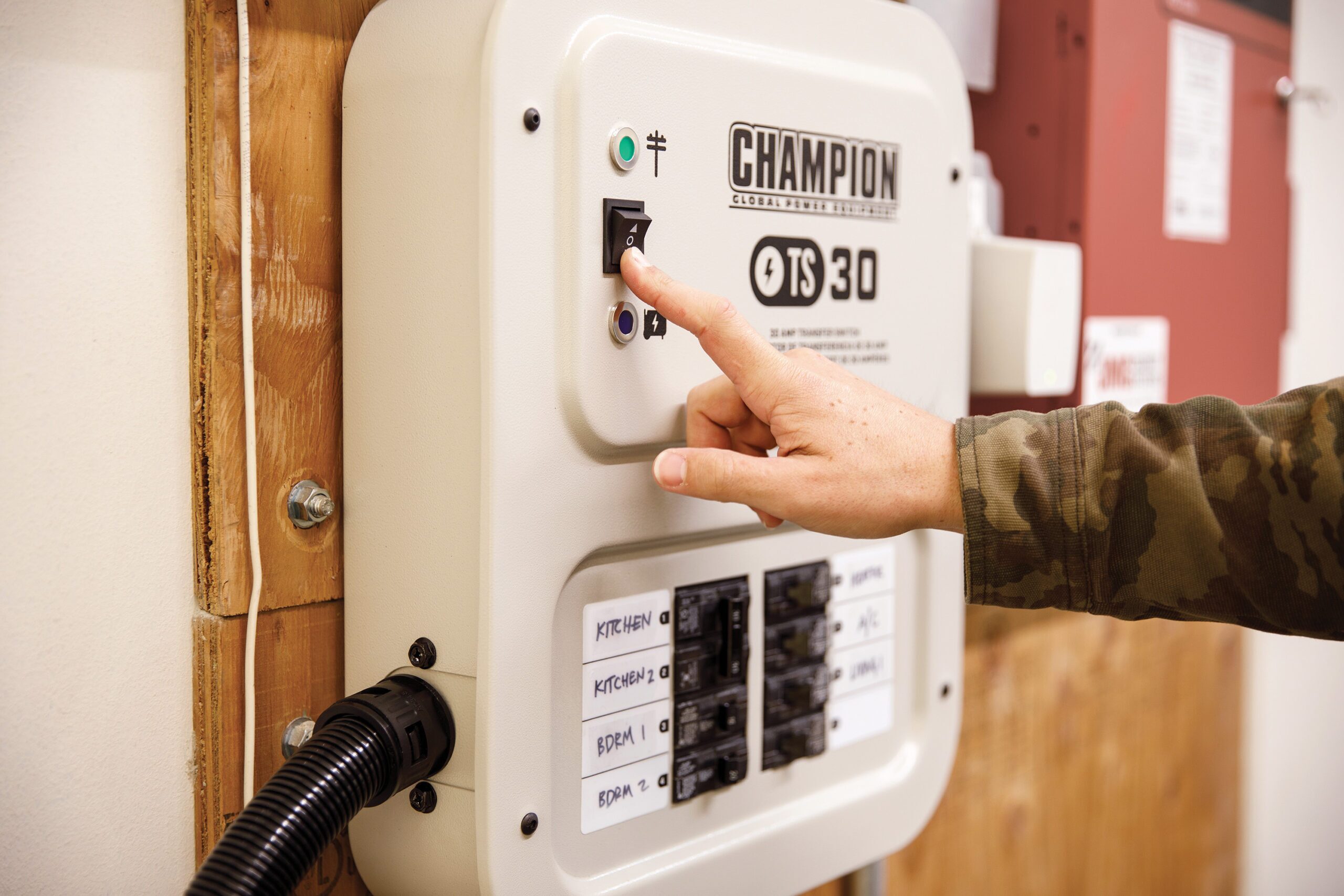
For a better solution, consider an MTS setup. Recommended for residential use, an MTS securely connects your generator to your home’s electrical panel. This setup allows you to easily switch between utility and generator power, helps prevent dangerous backfeeding into the grid, and protects both utility workers and your home’s electrical system.
201192 lifestyle 4

Understanding plug types and their compatibility with your generator is vital. Common types include NEMA L14-30 (30-amp) and 14-50 (50-amp), designed for various power ratings and applications. Matching your generator’s output with your home’s input requirements — you can check your appliances’ power draw against this wattage reference chart — ensures efficient operation and prevents equipment damage.

Interlock Kits

An interlock kit is a mechanical safety device that mounts directly on your home’s main electrical panel, physically preventing your main utility breaker and a generator breaker from being switched on at the same time. This eliminates the risk of backfeeding into the grid without requiring a separate transfer switch box, making it a more affordable alternative to an MTS while still letting you power any circuit in your panel rather than a preselected few. Like other panel-based setups, installation should be handled by a licensed electrician to ensure compatibility and code compliance.

StartLINK: Wired Auto Start/Stop

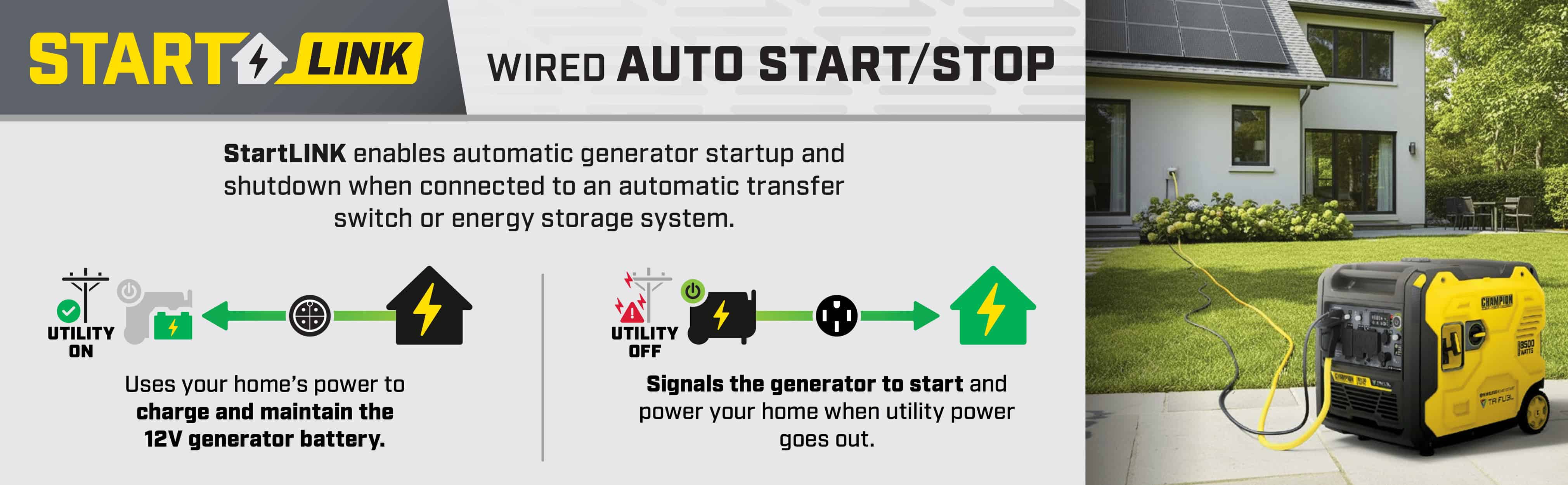
For homeowners who want backup power without manually starting a generator during an outage, Champion’s StartLINK technology offers a middle ground between a basic portable generator and a full home standby system. StartLINK provides a wired connection between a compatible Champion generator or inverter and an automatic transfer switch (ATS) or energy storage system (ESS), enabling automatic start/stop. When the utility is on, it also delivers 120V AC to keep your generator’s battery charged, so it’s ready to go when the power drops. There’s no walking outside in a storm to pull-start a generator.
201537 Amazon A+

StartLINK works with two types of connection:

  • With an ATS: The transfer switch detects the outage, signals the generator to start, and switches your home’s circuits to generator power once it’s running. When utility power returns, it switches back and shuts the generator down.
  • With an ESS: An ESS is a battery-based backup unit connected to your home’s essential circuits. During an outage, the ESS powers those circuits from its batteries while the generator stays on standby. When the battery charge drops to a level you set, StartLINK starts the generator to recharge the batteries back to your target level. Because the generator runs only when the batteries need charging, it doesn’t have to run for the entire outage.

This makes StartLINK-equipped inverters a strong option for anyone who wants the portability and lower cost of a portable generator, but with the hands-off convenience typically associated with permanently installed home standby systems.

Champion offers StartLINK on select portable generator and inverter models, giving compatible units convenient automatic starting capabilities when the power goes out.

What You’ll Need

A successful generator hook up starts with having the right equipment on hand. At minimum, this means a compatible portable generator, a transfer switch (manual or StartLINK-compatible automatic one), and a power inlet box to create a safe, weatherproof connection point between your generator and your home’s electrical panel. Since installation involves working inside the panel itself, the hands-on work of securing wiring and verifying connections is best left to your licensed electrician. Your job is making sure the right equipment is on hand before they arrive.

Champion Power Equipment offers accessories like transfer switches and power inlet boxes to enhance generator functionality. Additional equipment may be needed for a comprehensive generator hook up. High-quality extension cords are vital for connecting your generator to the inlet box. Choose cords rated for outdoor use and capable of handling your generator’s wattage.

Selecting suitable generator accessories involves considering specific power needs and the appliances you intend to run. Compatibility with your generator model and wattage requirements is essential. Champion Power Equipment provides durable, easy-to-install accessories that meet safety standards and ensure optimal performance. Equipping yourself with the right items and accessories ensures a seamless and efficient generator hook up.

What to Expect When Connecting a Generator to Your House

Connecting a portable generator to your home gives you a reliable power source during outages. So, how do you connect a generator to your house?

There are two main ways to do it: a manual transfer switch, where you start the generator and switch circuits over yourself, or an automatic setup, where the generator starts and takes over on its own when the power goes out. Automatic setups have traditionally meant a permanently installed home standby generator. Newer options like Champion’s StartLINK technology now bring that same hands-off convenience to select portable inverter generators. Both approaches connect the generator to your home’s electrical panel through a transfer switch. That’s the device that keeps generator power and utility power separate and prevents dangerous backfeeding into the grid.

Either way, the installation involves working inside your electrical panel, so it should be handled by a licensed electrician. They can help you choose the right setup for your home, handle any required permits, and make sure everything meets local code. Below is a general look at what each installation involves and what using it during an outage is like.

Rockhill Farm, 2024.

Installing a Manual Transfer Switch

An MTS setup starts with the transfer switch itself. It’s usually mounted on the wall next to your home’s main electrical panel and wired into that panel by a licensed electrician. Before any wiring begins, the electrician shuts off the main breaker so the panel is de-energized.

Next, you choose which circuits the switch will cover. Most manual transfer switches handle a set number of circuits, so you’ll decide ahead of time which ones matter most during an outage: the refrigerator, furnace fan, well pump, sump pump, lighting, or a few key outlets. The electrician then moves those circuits from the main panel to the transfer switch, where each one can be switched between utility power and generator power.

The final piece is the power inlet box. It’s mounted on an exterior wall and wired to the transfer switch, giving you a weatherproof connection point outside your home. Inlet boxes come in 30- or 50-amp versions, matched to your generator’s outlet (typically NEMA L14-30 or 14-50). With the inlet box in place, you don’t need to run extension cords through windows or doors during an outage.

Once everything is installed, here’s what a typical outage looks like. You set the generator at least 25 feet from your home, connect it to the inlet box with a power cord rated for its amperage, and start it. After the generator stabilizes, you flip your selected circuits over to generator power. Moving them one at a time helps avoid overloading the generator with startup surges. When utility power comes back, you reverse the process: switch the circuits back to utility, shut the generator down, and disconnect the cord.

Before you rely on your setup, have your electrician test it with the generator running to confirm each circuit works as expected. After that, regular generator maintenance (oil changes, air filter, spark plug, and fuel system checks as described in your owner’s manual) keeps it ready for the next outage.

Installing a StartLINK Automatic Transfer Switch

On the installation side, a StartLINK setup looks a lot like an MTS setup. The difference is what happens when the power goes out. A licensed electrician mounts the ATS near your main electrical panel and wires it in, covering the circuits you’ve chosen to back up. Like an MTS, the system also needs a power connection point for the generator outside your home. In addition, there’s a StartLINK wired connection between the generator and the ATS. That connection is what lets the two communicate.

Because the system is designed to start on its own, the generator needs a spot where it can stay connected and ready. That spot should be at least 25 feet from windows, doors, and vents, with at least five feet of clearance on all sides. If you have a tri-fuel StartLINK model, a natural gas connection installed by a qualified professional can let the generator run through longer outages without refueling.

Day to day, the system works quietly in the background. While utility power is on, StartLINK supplies 120V AC to keep the generator’s battery charged. When an outage hits, the ATS detects the loss of utility power and signals the generator to start. Once the generator is running steadily, the ATS transfers your selected circuits to generator power. There are no trips outside and no switches to flip. When utility power returns, the ATS moves your circuits back to utility and signals the generator to shut down.

Automatic doesn’t mean maintenance-free. You’ll still want to keep the generator fueled (if it isn’t on natural gas), follow the maintenance schedule in your owner’s manual, and check periodically that it’s connected and ready.

Frequently Asked Questions

Can I plug my generator directly into a wall outlet? No. Plugging a generator directly into a wall outlet, sometimes called “backfeeding”, is extremely dangerous and prohibited by electrical codes in most areas. It can send electricity back through the grid, putting utility workers at risk, and can severely damage your home’s electrical system. Always use a properly installed transfer switch or inlet box instead.

How far away from my house should I place my generator? Your generator should be positioned at least 25 feet away from windows, doors, and vents, with at least five feet of clearance on all sides, to prevent carbon monoxide from entering your home.

Do I need an electrician to install a generator hook up? While simple extension cord setups don’t require an electrician, installing a manual transfer switch or interlock kit involves working with your home’s electrical panel and should always be done by, or under the guidance of, a licensed electrician to ensure it’s safe and up to code.

Can a generator automatically turn on during a power outage? Yes, but this typically requires either a home standby generator with an ATS, or a portable generator equipped with StartLINK technology connected to a compatible ATS or ESS.

What’s the difference between StartLINK and a standard manual transfer switch? A standard manual transfer switch still requires you to manually start the generator and flip the switch yourself once the power goes out. StartLINK removes that manual step, as the generator connects to a compatible ATS or ESS and starts automatically when the ATS or ESS detects an outage, while also keeping the generator’s battery charged and ready at all times.

Does a StartLINK generator require professional installation? The generator itself doesn’t require installation since it’s portable, but the ATS or ESS it connects to does. Since those components are wired into your home’s electrical panel, that part of the setup should be handled by a licensed electrician, just like any other transfer switch installation.

Customer Support

Following these recommendations ensures your generator is ready to provide power when needed. Of course, even with a clear guide, generator hook ups can raise questions specific to your home’s setup, and that’s exactly where our support team comes in.

At Champion, we’re here for you with 24/7 customer support. Whether you need immediate assistance, available by phone or live chat, or prefer to tackle things on your own, we’ve got you covered. Our Help Center is filled with detailed articles and self-service tools to guide you through common questions and issues. Plus, our YouTube channel features a wide range of technical videos, offering everything from maintenance tutorials to troubleshooting guidance.

Powering Summer Camping

July 16, 2025

Ah, summer—a time when the sun shines brightly and the remnants of winter and spring feel far behind. The warmest season of the year brings not only cloudless skies and sunny days, but also a yearning for adventure. Whether it’s finding the perfect spot to bask on a sandy beach or exploring winding trails, there are countless ways to enjoy this time of year.

While many head toward the water, others pack up their cars and RVs in search of solitude in the wilderness. Tents are pitched, chairs unfolded and arranged for easy conversation, and portable stoves and coffee makers are set up for the comforts of home in the great outdoors.

But just as you press the button on the coffee maker—nothing happens. You forgot appliances like this require power, so that’s where portable generators and power stations come in. They’re more than just backup, they’re your adventure companions, delivering power, safety, and convenience wherever you roam.

100593 lifestyle 17

Power Anywhere, Anytime

Champion portable generators provide reliable power from 1,200 watts to over 7,500 watts—perfect for campsites, RVs, and off-grid adventures. Whether you need to run lights, a mini fridge, or even air conditioning in your RVs, these units keep your trip powered and stress-free.

Whisper-Quiet, Clean Energy Inverters

Inverter generators deliver clean energy, which is less than 3% total harmonic distortion (THD), making them ideal for sensitive electronics like phones, cameras, and even items like Starlink systems for camping and RVing. These units are also ultra quiet, often meeting regulatory noise levels of campgrounds, national parks, and so forth, maintaining the tranquility of the camping experience.

Dual Fuel Flexibility

Choose Champion’s dual fuel generators to switch effortlessly between gasoline and propane—ideal for extended camping trips where fuel availability may vary. This flexibility keeps you powered longer with fewer refuels and lets you fuel your generator your way, based on your preference.

Note: Always turn the generator off completely before switching fuels.

Convenience with Solar Generators

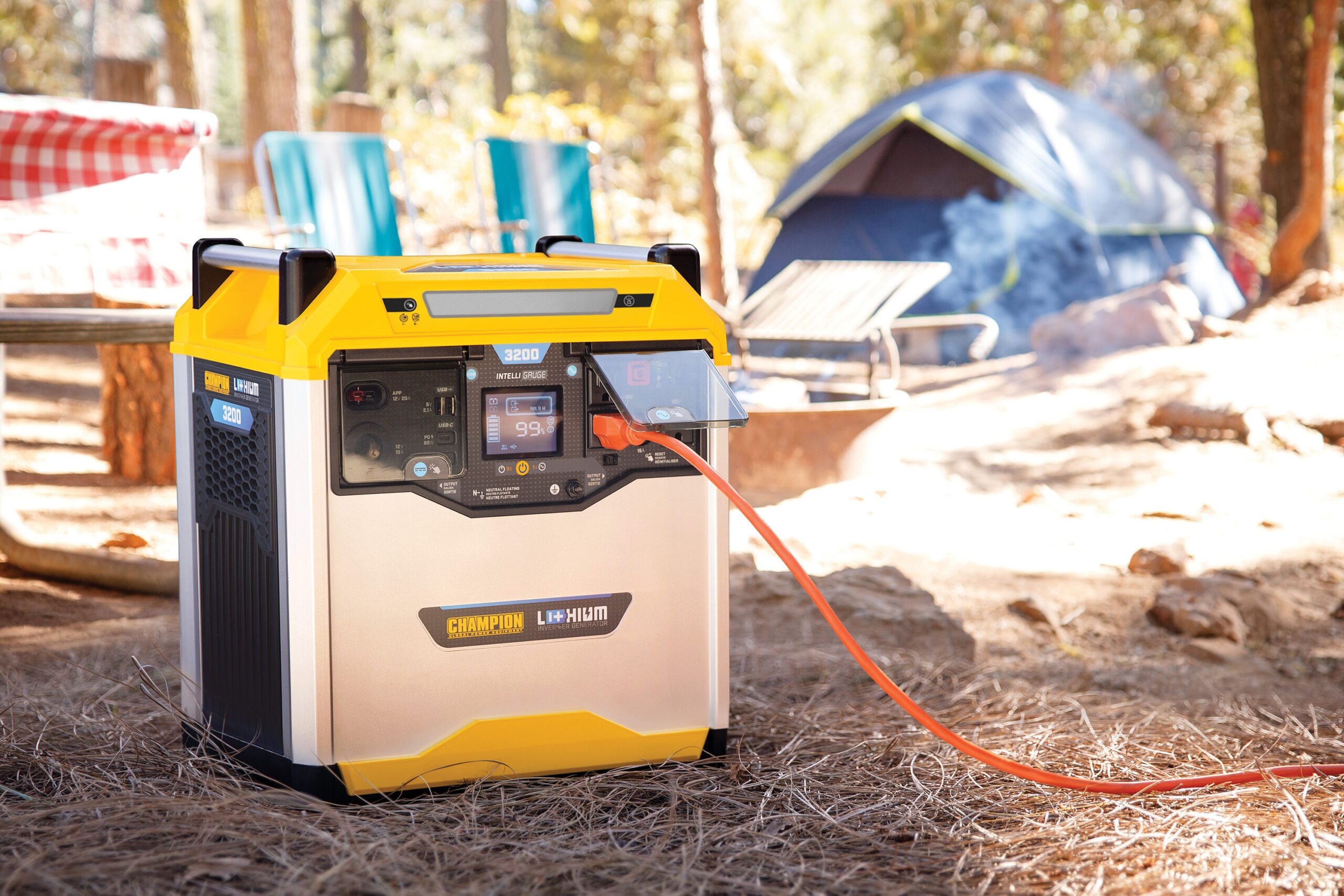
Champion’s lithium-ion power stations (285–3,276 Wh capacity) offer silent, fume-free charging for devices, lights, and small appliances. Since they don’t use an engine, there are no emissions or noise, making them perfect for use inside tents or during early-morning quiet. Power your essentials and enjoy that first cup of coffee and a hot breakfast in peace. For even greater convenience off-grid, both models are compatible with solar panel charging, giving you a sustainable way to recharge using the power of the sun.

Designed with Your Safety in Mind

Champion inverters and generators come with CO Shield®. CO Shield technology monitors the accumulation of carbon monoxide (CO), a poisonous gas produced by engine exhaust when the generator is running. If CO Shield detects unsafe elevated levels of CO gas, it automatically shuts off the engine. CO Shield is not a substitute for an indoor carbon monoxide alarm or for safe operation. DO NOT allow engine exhaust fumes to enter a confined area through windows, doors, vents or other openings. Generators must ALWAYS be used outdoors, far away from occupied buildings with engine exhaust pointed away from people and buildings.

Parallel Kits: Power Increase

Parallel kits are a game-changer for camping and RVing, allowing you to connect two compatible Champion inverters (of equal or different size) for increased power without upgrading to a larger, heavier unit. Even better, you can pair an inverter with a power station for a more versatile and flexible setup. This is perfect when you need extra juice for running RV air conditioners, electric cooktops, or multiple appliances at once. Not sure which kit you need? Champion’s easy-to-use Parallel Kit Selector Tool helps you find the right match in seconds, so you can power up with confidence on your next adventure.

Customer Support

At Champion, we’ve got your back with 24/7 customer support, whether it’s day or night. Need help right away? Reach out via phone or live chat. Prefer to handle things on your own? Our Help Center is packed with step-by-step articles and easy-to-use self-service tools. And for visual learners, our YouTube channel offers a library of technical videos, including maintenance tips and troubleshooting guides to keep you powered up and confident.

Staying Prepared during Hurricane Season

May 30, 2025

We’ve reached the middle of the year once again, and with it comes hurricane season. The 2025 Atlantic hurricane season officially begins on June 1 and runs through November 30. According to the U.S. National Oceanic and Atmospheric Administration (NOAA), this year’s season is expected to be “above-normal”, similar to 2024, due to warmer ocean temperatures.

Hurricane warning road sign

NOAA predicts between 13 and 19 named storms, with six to ten of those potentially developing into hurricanes. Of those, three to five may become major hurricanes. Don’t be caught off guard when a natural disaster like a hurricane strikes. Stay one step ahead by making your emergency preparations now.

Before the Storm Approaches

Preparation is a key part of safety. Having an emergency plan and being well-equipped can make all the difference. One of the most critical components of hurricane preparedness is securing a reliable backup power source. A generator ensures that key appliances like refrigerators, medical devices, and lighting remain operational, preventing food spoilage and supporting health and communication needs.

Stay alert by monitoring local news and weather updates for any hurricane watches or warnings. Know if your region is hurricane-prone and sign up for local alerts. Take preventive steps like trimming dead branches or removing hazardous trees that could fall onto your home during high winds. If you live in coastal or low-lying areas, prepare to evacuate to higher ground. Coastal winds can produce massive waves that evolve into storm surges, causing dangerous flooding.

Ensure your emergency kit is fully stocked and ready. Families should be able to sustain themselves for at least 72 hours. Kits should include water, non-perishable food, cash, a portable radio, and any unique necessities such as medications, baby supplies, or pet food.

As the Storm is in Motion

Be ready to evacuate at a moment’s notice. Stay up to date with the latest advisories through the radio, television, internet, or trusted social media sources. Always follow instructions from local authorities and avoid flooded roads or damaged bridges. If the eye of the hurricane passes over, you may experience a brief calm, but this is temporary. Remain in a safe, windowless area (not the basement), as intense winds will resume shortly, often from the opposite direction.

After the Storm has Passed

Continue monitoring news reports for updates on local conditions. Be cautious of post-storm hazards such as flooding, landslides, and structural damage. If using a generator, always follow safety guidelines: operate it outdoors, protect it from moisture, place it securely, avoid overloading or using inappropriate extension cords, and use protective covers like a Storm Shield if it’s still windy and or rainy outside. Stay clear of damaged areas, fallen power lines, and hazardous debris. Avoid potentially contaminated water, and discard any spoiled food, even if it was refrigerated. Document any property damage by taking clear photographs of both the building and its contents for insurance purposes.

Why Power Matters

When electricity goes out, your refrigerator, lights, phone chargers, and even air conditioning become unusable. Spoiled food can lead to high replacement costs, while a lack of communication devices can leave you disconnected from critical updates. High temperatures and humidity may even damage your home’s interior.

Millions lost power during the previous Atlantic hurricane season with many people in the path to potentially lose power this time around.

Safety First

Never use a generator indoors. Generator exhaust contains carbon monoxide: a deadly, invisible gas. Always operate generators outdoors, far from occupied buildings, with exhaust directed away from people and structures.

Champion Power Equipment: Your Partner in Emergency Power

Standard portable generators provide dependable backup power exactly when it’s needed. With options running on gasoline, propane, or natural gas, you can choose the right model for your home’s specific needs—whether it’s powering essential devices or your entire household.

Inverters are lightweight and portable. They deliver clean, efficient power ideal for sensitive electronics and essential appliances. They’re perfect for maintaining comfort and communication during outages.

Power stations offer a dependable and efficient indoor power solution. Since they operate without fuel, they produce no emissions and run silently—perfect for staying inside without having to brave the storm.

Home standby generators connect directly to your home’s fuel supply and automatically activate during an outage, keeping your home powered without the need for refueling, offering peace of mind and uninterrupted comfort.

Protect your generator or inverter with a Storm Shield. It defends against rain and wind, helping prevent water damage and electrical issues. This protection ensures your unit continues functioning safely through the storm.

24/7 Customer Support

At Champion, our customer support team is available 24/7, ready to assist you whenever you need help. We know how frustrating it can be to wait for support, which is why we offer immediate assistance via phone or live chat. For those who prefer a do-it-yourself approach, our Help Center is packed with articles and self-service resources to guide you. Plus, our YouTube channel provides an extensive library of technical videos, offering everything from maintenance tips to troubleshooting guidance.

Power Outages: Inconvenient and Often Unexpected

May 15, 2025

You turn on the forecast and are told the weather is perfect for an evening hike, then the weather has a change of heart. A storm brews and barrels through your neighborhood with full force. Soon, the lights go out, leaving you scrambling in the dark. You worry because you have essential medication that needs refrigeration, and to make matters worse, your food is about to spoil. You notice your phone is nearly out of charge, so how will you make important calls or stay informed during the emergency? You can’t rely on your laptop either; it hasn’t been turned on in days, and its battery is drained. It also would make no difference since the Wi-Fi router doesn’t have power.

This is what can happen during a power outage, but with the right backup power, you can keep your lights (and peace of mind) on.

Enter the fully-automatic home standby generator (HSB).

100304 lifestyle 9

Automatic Power

The beauty of home standby generators lies in their ability to turn on automatically via an automatic transfer switch (ATS).  The ATS is constantly monitoring utility power and once a power outage is detected, it takes only seconds for the generator to turn on and restore electricity. During harsh weather, it’s safest to remain indoors, so the automatic feature of our home standby generators means there’s no need to start them manually start them and since they are connected to your propane or natural gas systems, there is also no need to refuel them (this can probably be worded better). This seamless process keeps you safe and comfortable without ever having to brave the storm, adding to their array of benefits.

Whole-Home or Just the Essentials

Our range of home standby generators come in different sizes for different powering needs. Whether you wish to power your entire home or simply the essentials, there is a home standby generator system to cover all needs. This also allows you to customize your backup power solution to meet your budget. By using our nifty home standby generator selector tool, let it take care of the decision-making process and match you with the best fit for your home.

Reliable During Severe Weather

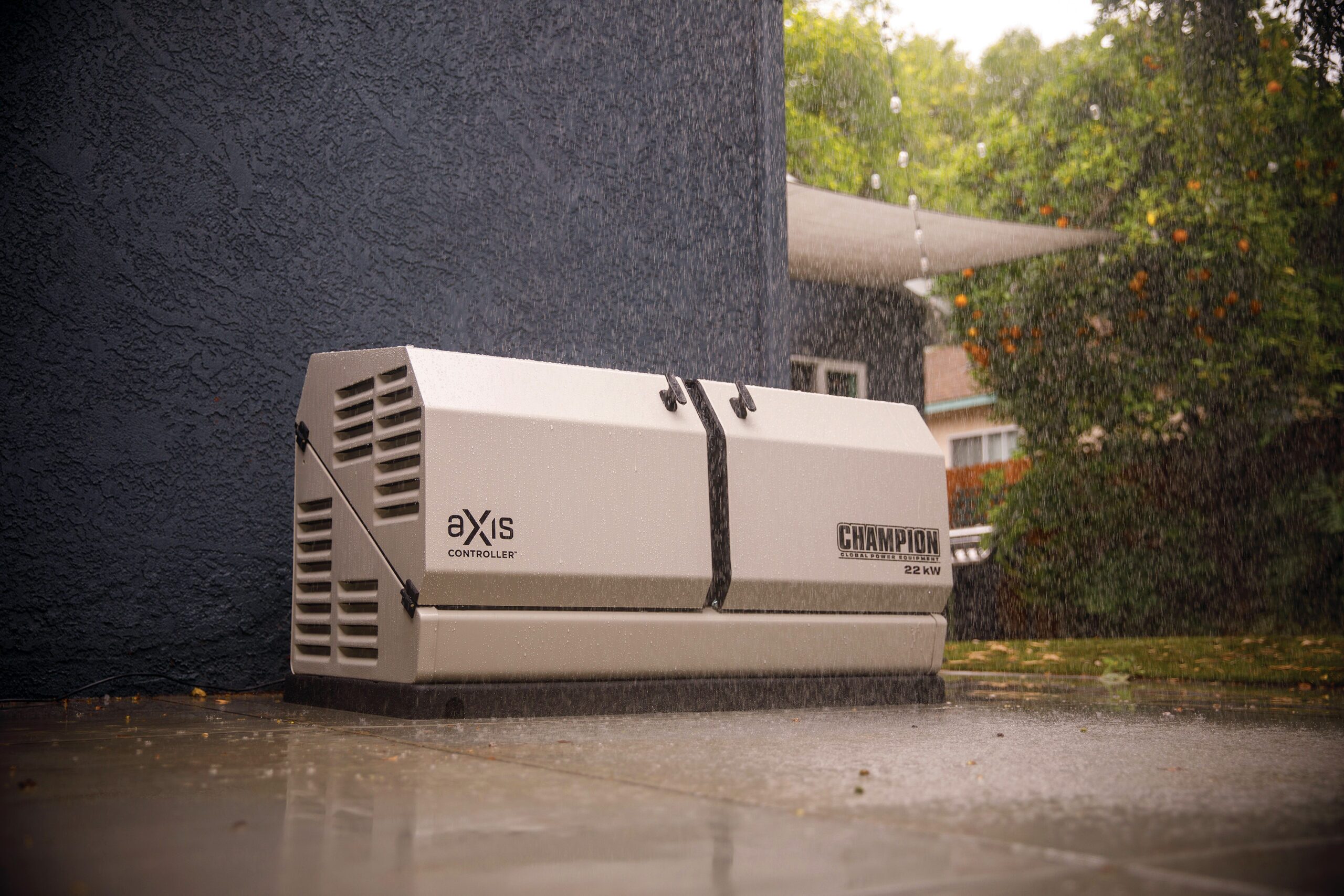
When we say tough protection against increment weather, we mean it. Our home standby generators are built to operate in subzero temperatures—as low as -22 °F. Encased in a weatherproof, outdoor-rated, aluminum-zinc-coated steel enclosure, the generator is engineered to withstand even the harshest elements.

Fuel Flexibility

Versatility is key when it comes to home standby generators. That’s why they can operate on either propane or natural gas. During installation, the generator is connected directly to your home’s existing utility supply, eliminating the need for manual refueling, unlike portable generators. These engines are optimized for fuel efficiency, long-term durability, and low maintenance.

Peace of Mind

Beyond convenience, a home standby generator protects your property from the costly effects of power outages, such as spoiled food or frozen pipes. During the cold winter months, it keeps the heat on to protect you and your family, and in the sweltering summer, it maintains cool indoor temperatures. Living without worry during a power outage—that’s true peace of mind.

Accessories

Load Management Modules

The 50-amp aXis Load Management Module enhances the efficiency and reliability of your home standby generator system. Designed to manage high-demand appliances such as air conditioners, water heaters, and electric ranges, this module helps prevent electrical overloads by intelligently controlling power distribution. It also allows you to assign priority levels to various appliances, ensuring that essential systems receive power first during an outage.

Customer Support

At Champion, we’re here for you around the clock, day or night, with 24/7 customer support. Whether you need immediate assistance, available by phone or live chat, or prefer to tackle things on your own, we’ve got you covered. Our Help Center is filled with detailed articles and self-service tools to guide you through common questions and issues. Plus, our YouTube channel features a wide range of technical videos, offering everything from maintenance tutorials to troubleshooting guidance.
Winching Wonders

April 17, 2025

You’ve left behind the boring, flat roads of cities and towns for a more adventurous experience. As an outdoor and off-roading enthusiast, you’re no stranger to the excitement the outdoors can bring. From shaky ground to muddy terrain to icy earth, the thrill of leaving behind the bustling city life is what propels you on your outdoor journey. However, adventuring safely should always be a priority.

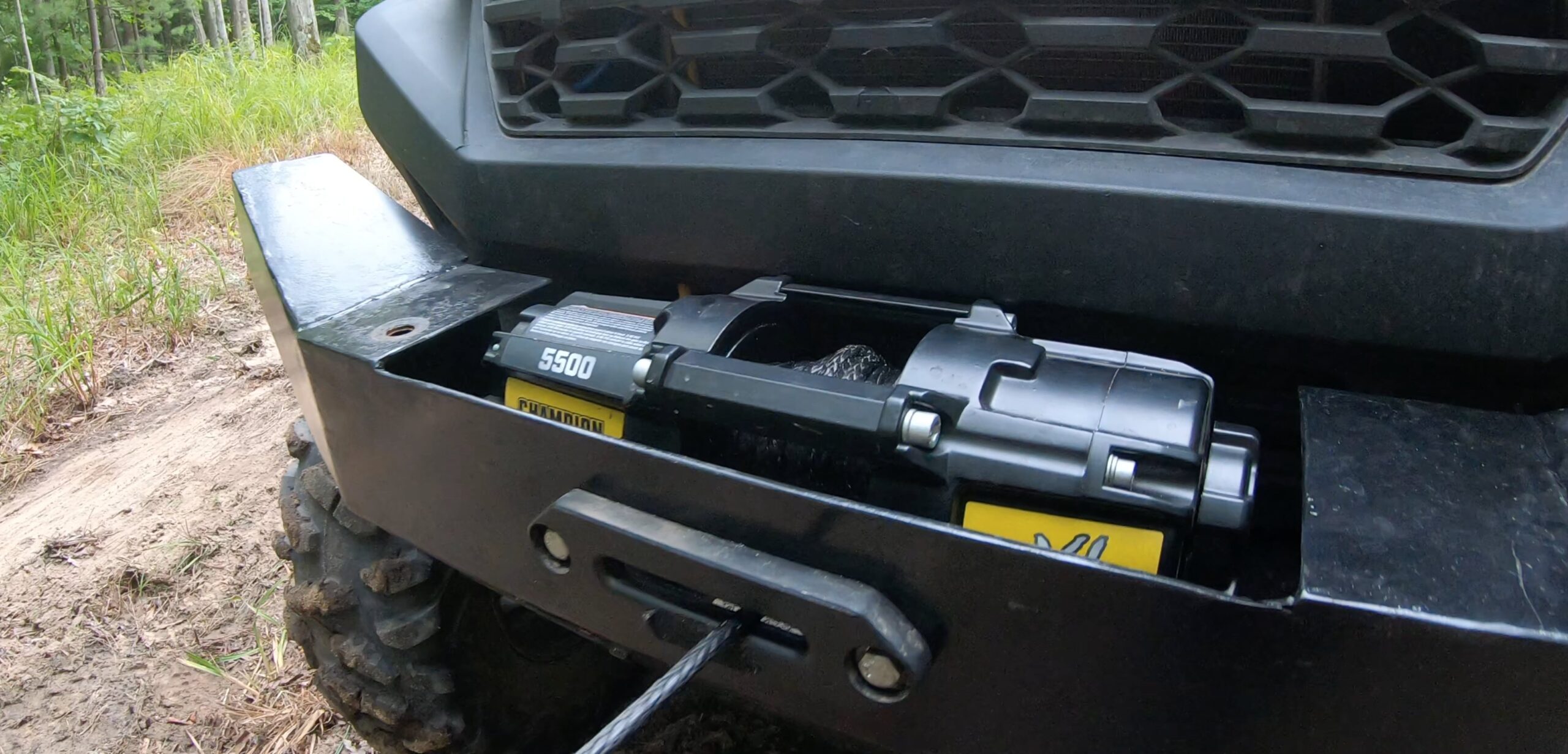
Ensuring your off-roading vehicle is equipped with everything needed to tackle different terrains is essential. Proper wheels, air compressors for flats, a jump starter, and a jack are just some of the must-have tools to make your off-roading adventure as smooth as possible. Another critical tool you’ll need to pull yourself out of a sticky situation is a winch. With the help of a winch, ditch getting stuck in a ditch and effortlessly eliminate any disruptions to your trip.

100723 lifestyle 5

Integral to Off-Roading Adventures

A winch is an essential tool for any off-road experience, especially when overlanding—venturing into remote areas. In such locations, there’s a high chance that few (if any) others will be nearby, and even if there are, they may be miles away from you and unaware that you’re in trouble. If you get stuck on rugged trails, snow-covered paths, or muddy and slippery terrains, a winch can help you easily and safely pull your vehicle out.

Keep in mind, however, that a winch is designed solely for overland pulling applications and should never be used to lift or hold suspended weight.

Essential for Emergency Situations

A winch is an invaluable tool for emergencies. Sometimes, luck won’t be on your side, and you may find yourself in need of help. As mentioned earlier, there’s a good chance you’ll be the only one around for miles in a remote area. In such situations, a winch becomes your best ally if you get stuck. However, a winch isn’t just useful for rescuing yourself—it can also help others in need. Whether it’s pulling someone out of a ditch or assisting during harsh weather conditions like snow or ice, a winch provides peace of mind. This is especially true for those who frequently travel on mountainous roads or through remote wilderness areas.

Convenience for Heaving Pulling

Winches are incredibly versatile. They’re not only useful for pulling vehicles out of tough situations but can also be used to pull heavy equipment, logs, and even boats! This makes them invaluable to more than just off-roaders—they’re also essential for farmers, homeowners moving fallen trees, and outdoor workers who need reliable assistance with challenging tasks.

Great for Outdoor Work and Recreation

Winches can help outdoor enthusiasts set up and maintain recreational spaces. After a major storm with harsh winds, a forest recreation area may be damaged by fallen trees of various sizes. Once the tree trunks are cut into more manageable pieces, a winch attached to a vehicle can help move the logs, making it easier to clean up the area. Additionally, a winch can assist in pulling dumpsters into place to clear away the fallen debris.

Ideal for Safety and Self-Sufficiency

If you’re going off-roading on your own, you should not assume that others will be present at your destination, especially in remote areas. This is why a winch contributes to both safety and self-sufficiency—it ensures you won’t be stranded or dependent on others arriving to assist during an emergency. With a reliable winch by your side, you’ll be prepared to handle challenging situations safely and independently.

Types of Winches

Portable Winches

Most winches are designed to be bolted onto their respective vehicles for secure winching. However, our portable winch is designed to be taken on the go. It no longer needs to be mounted on an ATV/UTV, truck, or SUV—you can take it wherever you need it. Portable winches are perfect for use on off-roading, overlanding, land maintenance, construction sites, machine shops, home improvement tasks, camping, and much more.

Utility Winches

Utility winches are perfect for tasks involving your boat or trailer. They make it easy to load or unload your boat or ATV onto a trailer. An added bonus of these types of winches is their portability, allowing you to take them wherever you might need assistance—such as getting unstuck. And did we mention that these units can also be manually operated? That’s right, you can use the winch the way that works best for you.

ATV/UTV Rated Winches

Our ATV and UTV winches range in capacity from 2,000 to 7,500 pounds, making them indispensable for a variety of tasks. They are designed to fit a wide range of ATV, UTV and side-by-side models from well-known manufacturers. Additionally, our partners at KFI Products offer specific winch mounts tailored to your winch and vehicle model, ensuring easy installation.

Truck/SUV Rated Winches

Winches with greater strength are typically designed for trucks or SUVs. These heavy-duty winches offer pulling capacities ranging from 10,000 to 12,000 pounds. They also feature speed mounts, allowing for quicker attachment and detachment to the front or rear of your vehicle.

Galvanized Steel or Synthetic Rope?

There are primarily two types of rope used for winches: galvanized steel and synthetic. Galvanized steel provides enhanced corrosion resistance and durability, making it ideal for harsh environments and extended use. Synthetic rope, on the other hand, is lighter, easier to handle, floats on water and less prone to kinking or forming burrs like steel rope.

Accessories

Who doesn’t like spicing things up a little? Our wide range of winch accessories will do just that to your winch. From protective covers to keep your winches shielded from the elements to fairleads to snatch blocks, we have got you covered.

Customer Support

At Champion, our customer support team is available 24/7 to assist you whenever you need help. We know how frustrating it can be to wait for assistance, which is why we provide instant support through phone or live chat. Prefer a do-it-yourself approach? Our Help Center is packed with informative articles and self-service resources to guide you. Additionally, our YouTube channel offers an extensive library of technical videos, covering everything from maintenance tips to troubleshooting advice.

Spring Cleaning: A Helpful Reset

March 20, 2025

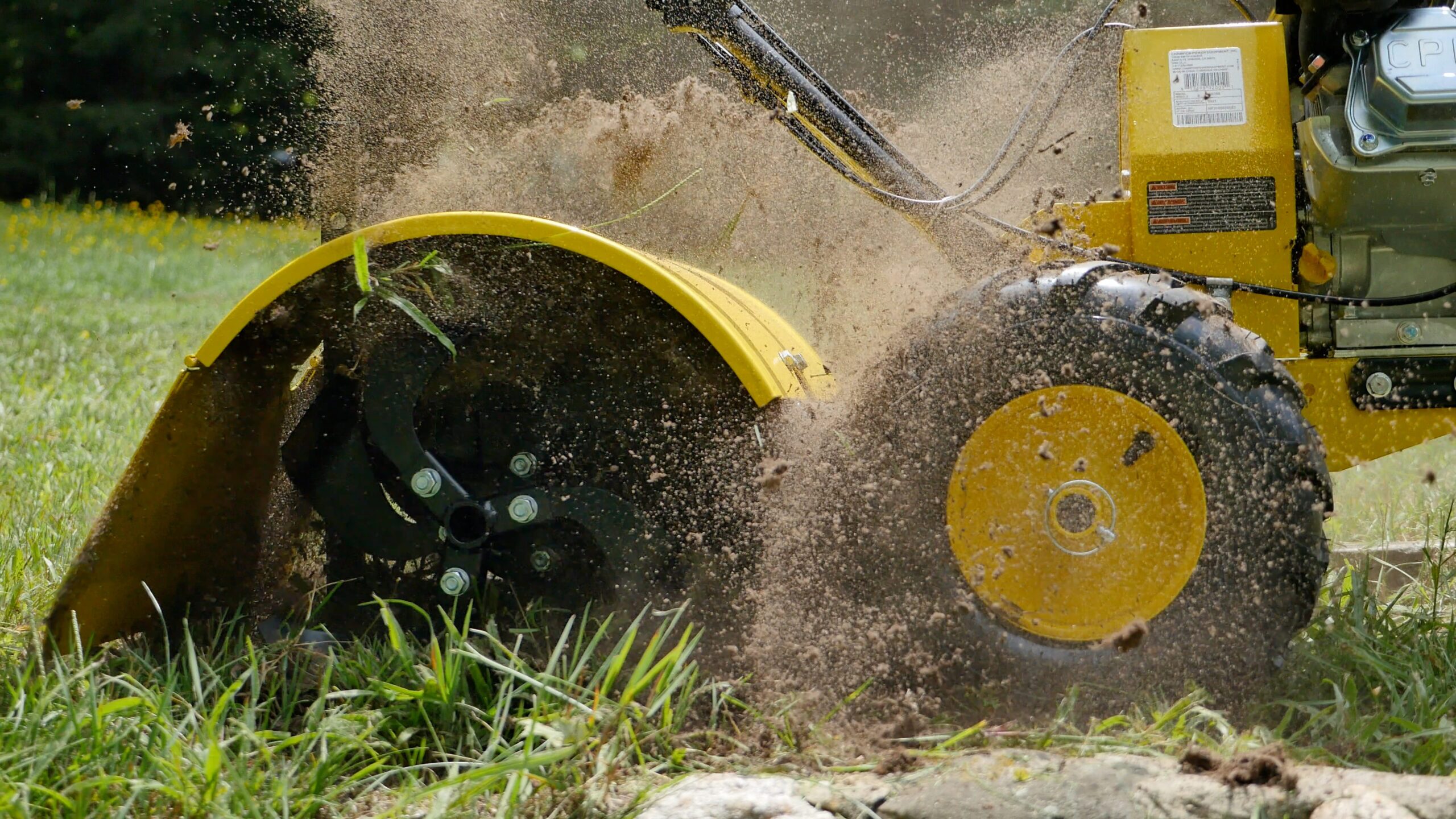
The snow and ice have finally begun to melt away. After months of cold and white, the first signs of spring are starting to appear: vibrant greens sprouting everywhere. However, the dormant season has left your lawn and garden looking a little rough. Dead plants, tangled roots, and winter’s leftover debris are running amok in your once-beautiful yard. Now’s the time to send in the cavalry! Grab your lawn edgers, cultivators and tillers, and augers to get them back in action. After a winter slumber, they’re ready to help make your yard the envy of the neighborhood again.

The Right Tools for a Spring Cleanup

Lawn Edgers

Although grass grows at a significantly slower pace in the winter due to reduced sunlight, it can still grow depending on the climate in your area. If left unattended—especially when regularly covered with snow—it can lose its curb appeal, quite literally. A lawn edger is the perfect tool to tidy up pathways, driveways, and flowerbeds that are often neglected during the colder months. Keeping these and other areas neatly trimmed can help ensure your lawn flows smoothly into neighboring lawns, if yours borders another.

Augers

Cold weather and harsh winters can take a toll on an already-worn fence. After several months of neglect, you decide it’s high time to upgrade your fencing, further adding to your spring cleanup. An auger is the perfect tool for the job, making it easy to drill even and uniform holes for fence posts. With a hardened steel auger bit, you can effortlessly dig holes up to 30 inches deep and eight inches in diameter. Now, if that’s not a hole in one, we don’t know what is.

Tillers and Cultivators

If your home’s garden soil has been exposed to freezing temperatures, there’s a good chance it will be hard and compact when it’s time to revive it in the spring. Tillers and cultivators are the perfect tools for the job. They are designed to loosen tough soil, incorporate nutrients, and aerate the ground, creating the ideal environment for planting spring flowers, vegetables, and grass seeds. However, before putting your green thumb to work, it’s important to clear the flowerbeds and garden of stubborn roots, weeds, and winter debris. Tillers and cultivators are also built to uproot any obstacles that could hinder your spring growth.

Improving Soil Drainage and Aeration

All of the aforementioned pieces of lawn and garden equipment assist with soil drainage and aeration. The blades of lawn edgers and tillers, as well as the auger bit of an auger, work to physically break up tough soil, allowing water and air to move more freely through these newly created spaces. By loosening the soil, the roots of flowers, vegetables, and grass can grow more easily and access nutrients more efficiently.

As hardened soil is broken down, air pockets and pathways are created for water to flow through. This improves water penetration, prevents water logging, and helps ensure proper drainage. Extremely firm soil can make it difficult for water to pass through and reach the roots of your plants, hindering their growth.

Customer Support

At Champion, our customer support team is here for you 24/7, ready to provide assistance whenever you need it. We understand how frustrating waiting for help can be, which is why we offer immediate support through phone or live chat. Prefer solving things on your own? Our Help Center is filled with articles and self-service resources to guide you every step of the way. Plus, our YouTube channel features a comprehensive library of technical videos, covering everything from maintenance tips to troubleshooting solutions.

B.A.S.S. Inks Deal with Champion Power Equipment as Elite Series Event Title Sponsor

February 20, 2025

BIRMINGHAM, Ala. —B.A.S.S. announced today that Champion Power Equipment has signed on as the title sponsor of the upcoming Champion Power Equipment Bassmaster Elite at Lake Okeechobee to be held in Okeechobee, Fla., Feb. 27-March 2.

Champion Power Equipment is a market leader in power generation equipment, and the Nevada-based company’s product lineup now includes portable generators, home standby generators, inverter generators, lithium-ion power stations, winches, log splitters and other outdoor power equipment.

“At Champion Power Equipment, we’re excited to partner with the Bassmaster Elite Series and celebrate the spirit of adventure that fishing embodies,” said the Director of Marketing at Champion Power Equipment Scott Henning. “While this sponsorship showcases the playful side of our tagline, ‘For home, work, and play,’ it’s also a reminder that our versatile equipment does so much more. From providing backup power during emergencies at home to reliable energy at remote job sites, we make the power that makes people’s lives easier — whether at work, at play, or somewhere in between.”

The Elite Series last visited Lake Okeechobee in 2023, and fans were treated to a victory by Louisiana’s Tyler Rivet when he posted a four-day weight of 86-15 and won by almost 4 pounds over Texas’ Clark Wendlandt, who brought 83 pounds to the scales.


“Champion Power Equipment specializes in outdoor power equipment — something that is used extensively by the fishing demographic, and this partnership is a natural fit,” said B.A.S.S. Chief Operating Officer Phillip Johnson. “We are looking forward to a very successful and exciting event at Lake Okeechobee and a mutually beneficial partnership in 2025.”


Bassmaster LIVE will be streaming on Bassmaster.com all four days, and coverage will also be available on The Roku Channel’s Roku Sports Channel Thursday and Friday as well as on FS1 from 8-11 a.m. Saturday and Sunday from 8-10 a.m. Stay up to date on all tournament coverage at Bassmaster.com/how-to-watch/.


About Champion Power Equipment


Champion Power Equipment is a market leader in power generation equipment. Champion has decades of experience providing dependable and durable power products designed and engineered in the US for the North American and world markets. For home, work or play, Champion products are the standard of performance excellence. We make the power that makes your life easier.


Since 2003 Champion Power Equipment has earned a reputation for designing and producing the market’s finest power equipment. Headquartered in Las Vegas, Nevada, Champion’s North American footprint also includes facilities in Southern California, Tennessee, Wisconsin and Ontario, Canada.


Today Champion’s product line has expanded to include portable generators, home standby generators, inverter generators, engines, winches and log splitters. With over 4.5 million generators sold in North America, Champion is a market leader in the power equipment field.


About B.A.S.S.


B.A.S.S., which encompasses the Bassmaster tournament leagues, events and media platforms, is the worldwide authority on bass fishing and keeper of the culture of the sport, providing cutting-edge content on bass fishing whenever, wherever and however bass fishing fans want to use it. Headquartered in Birmingham, Ala., the organization’s fully integrated media platforms include the industry’s leading magazines (Bassmaster and B.A.S.S. Times), website (Bassmaster.com), TV show, radio show, social media programs and events. For more than 50 years, B.A.S.S. has been dedicated to access, conservation and youth fishing.


The Bassmaster Tournament Trail includes the most prestigious events at each level of competition, including the Bassmaster Elite Series, St. Croix Bassmaster Opens Series presented by SEVIIN, Mercury B.A.S.S. Nation Qualifier Series presented by Lowrance, Strike King Bassmaster College Series presented by Bass Pro Shops, Strike King Bassmaster High School Series, Bassmaster Junior Series, Bassmaster Team Championship, Newport Bassmaster Kayak Series presented by Native Watercraft, Bassmaster College Kayak Series, Yamaha Bassmaster Redfish Cup Championship presented by Skeeter and the ultimate celebration of competitive fishing, the Bass Pro Shops Bassmaster Classic presented by Under Armour.

Champion Power Equipment Returns to CR7 Motorsports For 2025 Season with Driver, Grant Enfinger

February 20, 2025

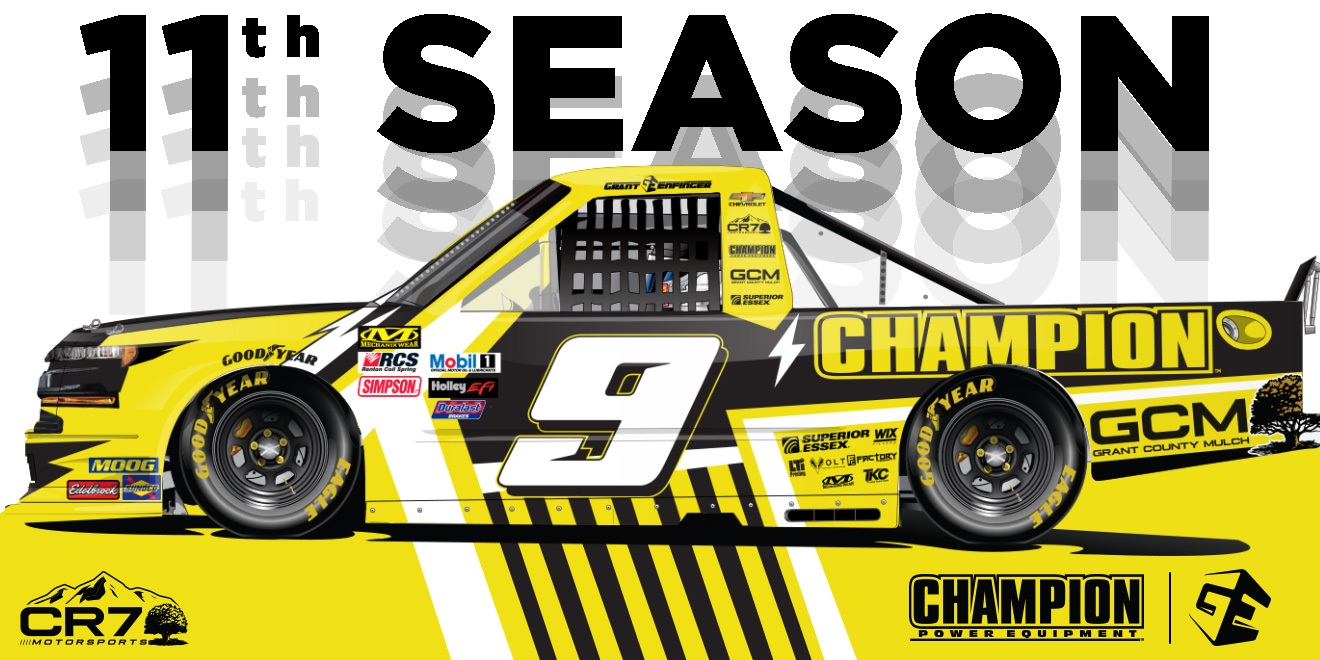
Statesville, N.C. (February 19, 2025) – Champion Power Equipment, a trusted leader in the power equipment industry, returns to CR7 Motorsports as a primary partner of Grant Enfinger, and the No. 9 team for 19 races throughout the 2025 NASCAR CRAFTSMAN Truck Series (NCTS) season. Champion Power Equipment will kick off their 2025 campaign in Saturday’s Fr8 208 at Atlanta Motor Speedway.

Since 2003, Champion Power Equipment has earned a reputation for designing and producing the market’s finest power equipment. Today, Champion’s product line has expanded to include portable generators, home standby generators, inverter generators, engines, winches, and log splitters. With over 4.5 million generators sold in North America, Champion is a market leader in the power equipment field.

The 2025 NCTS season will mark the 11th consecutive season that Champion Power Equipment has supported Enfinger throughout his ARCA Menards Series and NCTS career.

“It has been an honor to be represented by Grant (Enfinger) for the past 11 seasons,” said Dennis Trine, CEO, Champion Power Equipment. “From our humble beginnings to being the prominent industry leader, our growth journey has been nothing short of remarkable. We make the portable electric power that powers your life, home, work, and play, so this partnership is a natural fit for us. We are able to connect directly with our consumers in the campgrounds at race tracks across the U.S., and grow our brand recognition with all of the loyal NASCAR fans.”

Enfinger, who is currently fourth in the 2025 NCTS driver point standings, is proud to continue representing Champion Power Equipment on and off the track.

“Champion’s line of portable generators is a great fit for NASCAR fans who love to tailgate and camp at their favorite racetrack,” said Grant Enfinger, driver of the No. 9 Champion Power Equipment Chevrolet Silverado RST. “It’s always fun to go out into the campgrounds each weekend and meet all the fans that support me and Champion. By getting out there and connecting directly with their consumers, we’ve had the honor and privilege to see the brand grow over the years. Champion has become family to me and my family,11 seasons together is a testament to that, and I am looking forward to many years to come.”

Champion Power Equipment will adorn the No. 9 Chevrolet Silverado RST for the following 19 races throughout the 2025 season; Atlanta Motor Speedway, Las Vegas Motor Speedway, Homestead-Miami Speedway, Texas Motor Speedway, Kansas Speedway, North Wilkesboro Speedway, Nashville Superspeedway, Michigan International Speedway, Pocono Raceway, Lime Rock Park, Lucas Oil Raceway, Watkins Glen, Darlington Raceway, Bristol Motor Speedway (September), New Hampshire Motor Speedway, Charlotte Motor Speedway Road Course, Talladega Superspeedway, Martinsville Speedway (October), and Phoenix Raceway.

The Fr8 208 from Atlanta Motor Speedway will air live on FS1 Saturday, February 22, beginning at 1:30 p.m. ET. The second of 25 races on the 2025 NCTS schedule will also be broadcast live on the Motor Racing Network (MRN) and SiriusXM NASCAR Channel 90.

About Champion Power Equipment

Since 2003 Champion Power Equipment has earned a reputation for designing and producing the market’s finest power equipment. Headquartered in Las Vegas, Nevada, Champion’s North American footprint also includes facilities in Southern California, Tennessee, Wisconsin and Ontario, Canada. Champion Power Equipment is a market leader in power generation equipment. Champion has decades of experience providing dependable and durable power products designed and engineered in the US for the North American and world markets. For home, work or play, Champion products are the standard of performance excellence. They make the power that makes your life easier. Today Champion’s product line has expanded to include portable generators, home standby generators, inverter generators, engines, winches and log splitters. With over 4.5 million generators sold in North America, Champion is a market leader in the power equipment field. For more information visit www.championpowerequipment.com to learn more about their journey and the revolutionary products that have made Champion synonymous with excellence.


Reliable Power for the Job Site

February 13, 2025

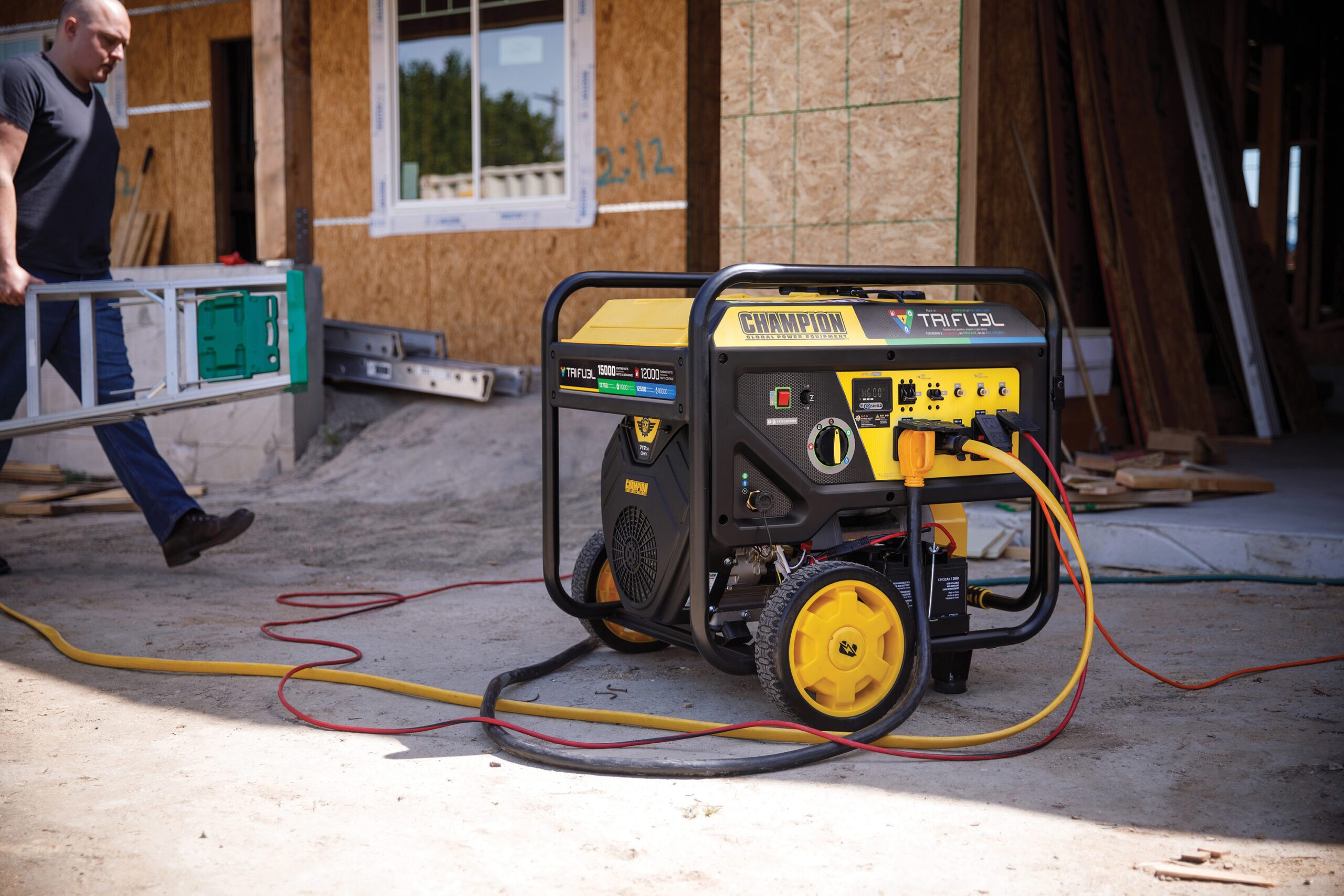
You wake up, get ready, make your morning brew, and rush out the door. You know it’s going to be a busy day. You are helping to construct a new home, and your site manager is entrusting you to oversee the day-to-day operation. This includes, but is not limited to, ensuring materials are ordered correctly and delivered in a timely manner, assigning who goes where and does what, and most importantly having the means to power all the tools required to build a sturdy and safe home for a new homebuyer. It is usually a safe bet that in the early stages of planning a home, electrical has not been setup quite yet. This is where having a reliable portable generator and or power station comes into play. Whether you are a seasoned professional or first-time builder, you know the importance of reliable power for any kind of job.

a man is standing next to a generator in a construction site.

The Benefits of Portable Power

Powering Tools and Equipment

Choosing the right portable power source for a construction site can be challenging, as it requires powering a variety of tools, each with different wattage needs to operate efficiently. Equipment like table saws and compressors often require more wattage compared to tools designed for lighter tasks, such as palm sanders. We offer a wide range of portable generators and power stations to ensure you have the perfect power solution for any job. Plus, with our portable generator selector tool, the decision-making process has never been easier.

Charging Cordless Tools and Devices

Power stations and inverters equipped with USB ports and AC outlets are excellent sources of power for keeping cordless tool batteries, work phones, and tablets fully charged. These portable solutions also provide clean energy for sensitive electronics required on the job site. By keeping these generators on hand, you can eliminate downtime caused by dead batteries and devices.

Lighting

Often, the workday slips by, and we find ourselves working late into the night or the early hours of the morning. Working in the dark can be dangerous without proper lighting—poor visibility can lead to injuries or damage to the build, resulting in higher costs and missed deadlines. Portable generators and power stations are excellent for keeping floodlights, work lamps, and other lighting devices operational during these crucial times.

Convenience in Remote Areas

We put the ‘portable’ in portability. When it comes to mobility, think of portable generators or power stations. These make an ideal choice for job sites in isolated or off-grid areas. They can easily be transported in your vehicle to specific sites or between various jobs and locations. Many units are lightweight and can be carried by one person, while others may require at least two people to load them into a vehicle.

Backup Power for Emergency Situations

Power outages can be unexpected, and when you are in the middle of an important job, they can cause various delays—logistical, financial, and mental. Portable units like these are designed to provide peace of mind during emergencies. They have the capability to supply power to safety equipment such as radios, on-site first-aid stations, and emergency lighting during nighttime or low-visibility hours

The Right Generator for the Right Job

Portables Generators

You have plenty of options with our line of portable generators. We offer a variety of units that operate exclusively on gasoline, use both gasoline and propane, or provide the flexibility of three fuel options: gasoline, propane, and natural gas. These generators are highly versatile, giving you full control over your preferred fuel type. With wattages ranging from 1,500W to 15,000W, they are perfect for construction projects of any size.

Power Stations

Power stations are an excellent solution for tackling the challenges of job sites by providing reliable power inside a build or out of it. Operating without the need for fuel, they are emission-free and silent, making them ideal for maintaining a safe and quiet workspace. Equipped with multiple outlets—and some models even offering wireless phone charging—power stations can power a variety of tools and equipment essential for keeping the job site running smoothly.

Customer Support

At Champion, our customer support team is available 24/7, ready to assist you whenever you need help. We know how frustrating it can be to wait for support, which is why we offer immediate assistance via phone or live chat. For those who prefer a do-it-yourself approach, our Help Center is packed with articles and self-service resources to guide you. Plus, our YouTube channel provides an extensive library of technical videos, offering everything from maintenance tips to troubleshooting guidance.